For a long time, the measure of a beautiful bouquet was how much it held. Garden roses tucked against ranunculus, a trail of jasmine, three kinds of foliage and something unexpected for texture. Those arrangements can be lovely, but heading into 2027 the most talked-about bouquets are doing something much simpler. They are made from one flower, gathered in a generous handful, with the stems left long and bare.
Who What Wear’s look at the planning trends set to define 2027 weddings singled out the mono bouquet as a clear direction, with florists describing a move away from multi-bloom arrangements towards one or two flower types at most. The idea is that restraint reads as confidence. When there is only one bloom to look at, you notice its shape, its colour and the way the stems curve in your hand.
Why it works so well right now
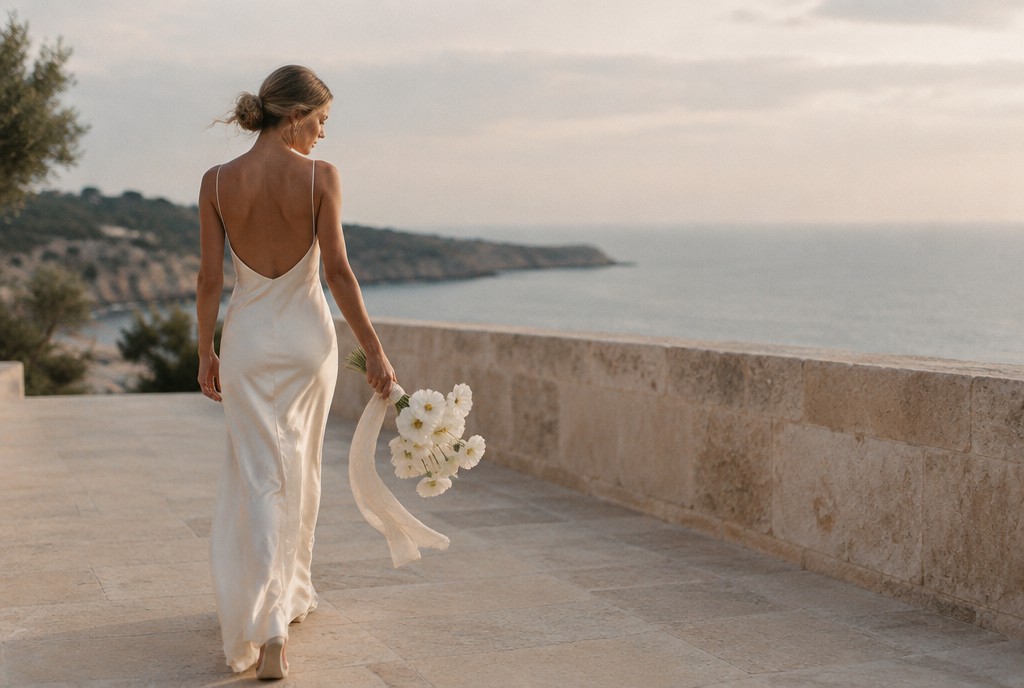
Part of the appeal is how naturally it sits beside the way brides are dressing. Sleek slip gowns, clean tailoring and sculptural silhouettes leave very little room for a bouquet that competes with them. A single variety carried loosely at the hip feels like an accessory chosen with the same eye as the dress, rather than a separate decision.
It also photographs beautifully in the candid, documentary style so many couples are asking for. A bouquet of twenty white poppies swinging at your side as you walk reads clearly in a frame, even at a distance. A dense mixed arrangement can blur into a single shape.
And there is a lightness to it. Brides who have carried large bouquets often talk about how heavy they become over an afternoon. A handful of long stems is easy to hold, easy to set down at dinner and easy to hand to someone else when you want both hands free for a hug.
Choosing your flower
The whole look rests on one choice, so it is worth thinking about what you love rather than what you think a bride should carry. Start with the season. An Australian spring wedding opens up ranunculus, sweet peas, tulips, Iceland poppies and, later in the season, peonies. Summer brings cosmos, garden roses and dahlias. Autumn and winter suit anemones, hellebores and branches of blossom or berries.
Your florist will know what is reliably available in your region and when, and this matters more with a single variety than with a mixed bouquet. If your chosen bloom is scarce on the week of your wedding, there is nothing else in the arrangement to carry it. Ask early, and ask about a second choice in case the first is not looking its best.
Think about scale and stem as well as flower. Some blooms are naturally sculptural on their own. Calla lilies, tulips and poppies have long, graphic stems that look striking when left exposed. Others, like sweet peas, are better gathered in larger numbers to create a soft cloud of colour. A good florist will help you balance the number of stems against your height and the line of your gown.
The details that make it feel considered
With so little in the bouquet, the finishing matters. Leaving the stems bare and trimmed to the same length gives a clean, modern line. A length of raw silk or linen ribbon, left to trail rather than wrapped tightly, adds movement without adding fuss. Some brides tie it with a strip of fabric cut from their gown’s alterations, which is a small, private detail that means a great deal.
Colour is where you can be playful. An all-white bouquet feels classic and calm. A single variety in butter yellow, soft apricot or deep burgundy turns the bouquet into a point of colour against an ivory dress, without the visual noise of a mixed palette.
Carrying the idea through the day
The single-variety approach works best when it is echoed rather than repeated. Bridesmaids might each carry a smaller handful of the same flower, or a different single variety in a related tone. Buttonholes can be one stem of the bride’s flower. On the tables, a few bud vases each holding one bloom can tie the room back to the bouquet without needing large centrepieces.
There is a practical upside here too. Building the whole day around fewer flower types often makes ordering simpler for your florist and can reduce waste, since there are fewer fillers and greenery that end up in the bin at the end of the night. Whether that translates into savings depends on the bloom you choose. Some single varieties, peonies in particular, are expensive in any quantity, so talk through numbers honestly before you commit.
A bouquet that feels like you
The appeal of the mono bouquet is that it asks you to make one clear choice and stand by it. It might be the flower from your grandmother’s garden, the one you bought each other on your first weekend away, or simply the bloom you stop to look at every time you pass a florist. Carried on its own, it becomes part of your story in a way a mixed arrangement rarely does.