Picture the moment one partner walks down the aisle. Now picture the view from the other end. A line of raised phones, each one glowing, and a sea of screens where faces should be.
More couples are asking guests to put their phones away for the ceremony. Bridebook's 2027 forecast describes the rise of the private wedding, where couples guard access to their celebration through tightly chosen guest lists and phone-free ceremonies. It also reports that UK elopement searches have more than doubled since 2022. Those figures are from the UK, but the instinct to protect the quiet of the day is easy to recognise.
Why couples are choosing it
The first reason is presence. When guests are watching with their own eyes, the room feels different. People react in real time, laugh at the same moments and wipe their eyes together.
The second is the photographs. A professional photographer often needs a clear line of sight, and a guest leaning into the aisle with a phone can end up in the frame of the most important shot. Several couples find that their favourite image of the day is one that nobody else was trying to take.
The third is privacy. Not everyone wants their wedding appearing online before they have seen their own photographs. A phone-free ceremony gives you some control over how and when the day is shared.
How to ask without sounding stern
The tone matters more than the rule. A gentle request will be received better than a stern sign, and most guests are happy to comply when they understand the reason.
Mention it on your wedding website or invitation in a warm, short line. Something like "We would love you to be fully present for our ceremony, so we have asked for phones to be put away. Our photographer will share images with you afterwards."
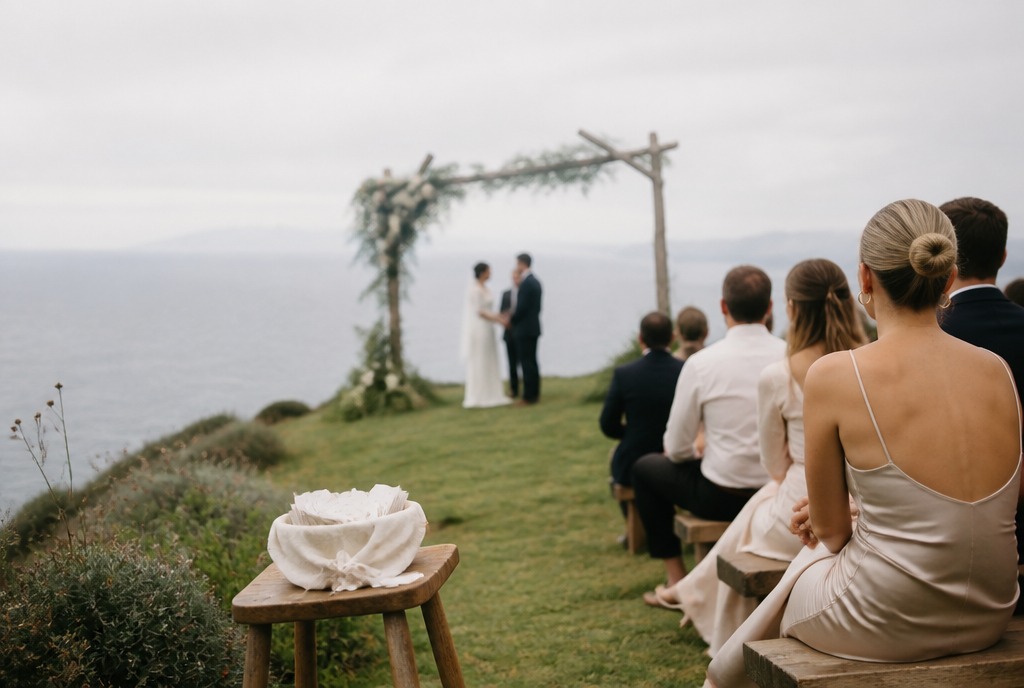
On the day, ask your celebrant to repeat the request just before the ceremony begins. Hearing it from the celebrant, with a smile, carries more weight than a printed card. A small handwritten sign at the entrance can reinforce it, and an usher can offer a basket or a linen pouch where people can leave their phones during the ceremony.
Think about who needs a phone
Some guests have good reasons to stay reachable. A parent might be waiting on a call from a babysitter. Someone might be on call for work or caring for a family member. Others may use their phone for accessibility reasons.
Tell people they can keep their phone on silent and tucked away, rather than handing it over. Make it clear that the request is about not filming or photographing, not about being unreachable. That small adjustment keeps the rule kind and removes most objections.
It is also worth speaking to older relatives personally. A grandparent who has been waiting years to take a photo of you in your dress may feel hurt by a blanket rule. Offer to arrange a portrait with them afterwards, so they leave with their own picture.
Give guests something in return
People are more willing to switch off when they know the images are coming. Tell your guests when to expect photographs, and keep the promise. Many photographers can supply a small selection within a few days, and a shared online gallery lets everyone download their favourites.
You might also set up a spot after the ceremony where guests can take as many photos as they like. A flower-covered arch or a simple wall in good light makes an easy backdrop, and it gives the phones a happier place to be.
Make the rest of the day flexible
An unplugged ceremony does not have to mean an unplugged wedding. Most couples are happy for guests to take photos and videos at the reception, and the dance floor is usually better for it. Draw the line where it matters most to you, and relax on the rest.
If the idea of banning phones for the whole day appeals, you can also make a rule for the dinner. Ask guests to keep phones off the table during the speeches, and let the conversation fill the space instead.
A small decision with a big effect
Asking guests to put their phones away costs nothing and takes a sentence or two to explain. For many couples, it changes the feel of the whole ceremony. Faces turn towards each other, the room goes still and the moment is held by the people actually in it.