For a long time the wedding album followed a fixed script. You gathered the family into rows, you found good light, you held the pose until the photographer was happy, and then you did it all again. The pictures that came back were lovely and correct, and a great many of them looked much like everyone else’s. The way couples want to be photographed now has moved on from that, and it is one of the more meaningful shifts in how a wedding is remembered.
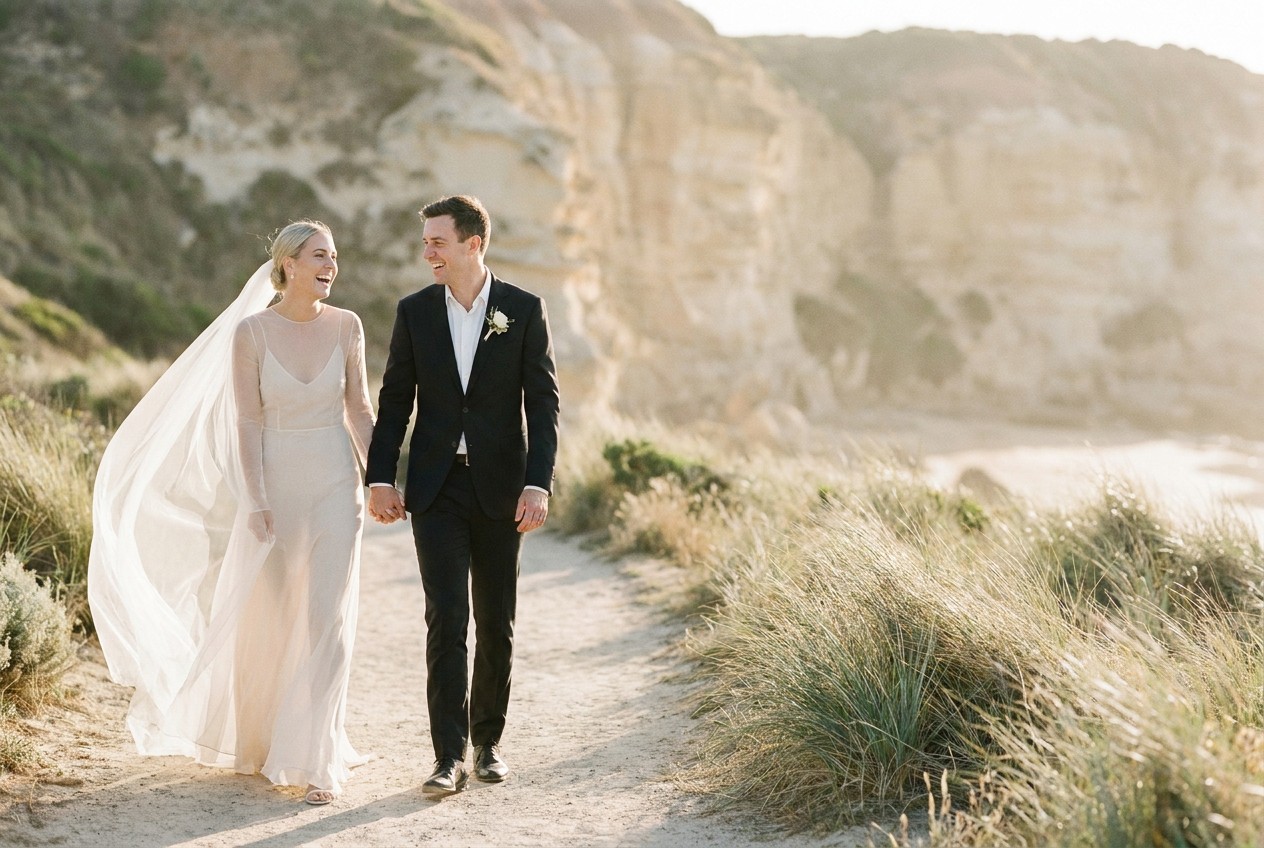
Together Journal, reporting on the Pinterest 2026 wedding trends, describe photography moving away from the arranged album towards something more cinematic, images that catch a moment as it happens rather than stopping the day to build it. Real Weddings makes a similar observation about 2026, noting photographers blending documentary storytelling with editorial composition. The record that comes back sits somewhere closer to a film still than a portrait sitting, and it tends to hold up far better over the years.
What documentary actually means
The word gets used loosely, so it helps to be clear about it. A documentary photographer works as an observer rather than a director. They move quietly through the day, watching for the moment before it arrives, and they photograph what is genuinely happening rather than asking you to perform a version of it. Your grandmother wiping her eyes during the vows, the private laugh between you and your sister while the dress is being done up, your partner’s face the second before you appear. None of that can be posed, because the moment you arrange it, it stops being true.
This does not mean there are no portraits at all. Most couples still want a handful of considered images of the two of them, and any good documentary photographer will make time for those. The balance has simply tipped. The bulk of the album is now given over to the day as it unfolded, and the set-piece portraits become a small, deliberate part of a larger story.
Why the in-between moments matter
The images couples treasure a decade on are rarely the formal line-ups. They are the ones that carry feeling. There is a reason for that. A posed photograph records what people looked like. A candid one records what the day felt like, and feeling is the thing that fades first from memory and is hardest to get back.
The quiet stretches hold a surprising amount of that feeling. The morning of getting ready, the walk between the ceremony and the reception, the moment on the dance floor when nobody is watching. These are the parts of the day you will not consciously remember to look at later, which is exactly why having them photographed well is such a gift.
It still takes real skill
It would be a mistake to think documentary means casual, or that anyone with a good camera can wander around and catch it. Working this way is harder than directing a scene, not easier. The photographer has to read a room, anticipate where the next moment will land, and be standing in the right place with the right light before it happens. Editorial composition still applies, so the framing, the use of negative space and the handling of light are all considered, even when the subject has no idea a photograph is being made.
This is why the portfolio matters more than the price list. A photographer who shoots this way will have galleries full of genuine moments rather than the same three poses repeated across different couples. Look for images that feel alive, and pay attention to whether the people in them look like themselves.
Planning a day that allows for it
The style asks for a little room to breathe, and that is mostly a matter of the timeline. A schedule packed to the minute leaves no space for the unguarded moments to occur, so build in soft edges. Give yourselves an unhurried morning. Allow a gap between the formalities where people can simply be together. The best pictures often come from the parts of the day nobody scripted.
An unplugged ceremony helps too, not for etiquette but for the photographs. A row of guests holding phones aloft changes what the camera sees, and it pulls people out of the moment you are trying to capture. Ask guests to put the phones away and let your photographer do the work.
Most of all, choose someone you feel comfortable around, then trust them. The whole approach depends on you forgetting the camera is there, and that only happens when you are relaxed in the photographer’s company.
A documentary album asks a little more of you in the planning and gives a great deal back in return. It is the difference between a set of photographs you file away and a record of the day you will actually return to, one that still feels like it did when you were living it.