For a good few years, the safe answer to a wedding palette was to take the colour out of it. Bone, ivory, oat, the softest possible sage. It photographed cleanly and it never frightened anyone, and there is a reason it held on for so long. What is happening now is a gentle correction. Couples are reaching for tones with more blood in them, and the result feels warmer, more grown-up and a great deal more personal.
The trend forecasters have a name for it. Together Journal, reporting on the Pinterest 2026 wedding trends, call it rooted romance, a move towards plum, merlot, fig and olive. These are colours drawn from the garden and the cellar rather than the paint chart, and they bring a depth to a room that a neutral palette simply cannot reach.
Colours with something underneath them
The appeal of these deeper tones is that they carry a mood. Merlot has the richness of a good red at the end of a long dinner. Fig sits somewhere between brown and purple and reads as expensive without trying. Olive is quietly flattering on almost everyone, which matters enormously when your bridal party photos will hang on a wall for the next forty years. Plum holds the drama of black without the severity.
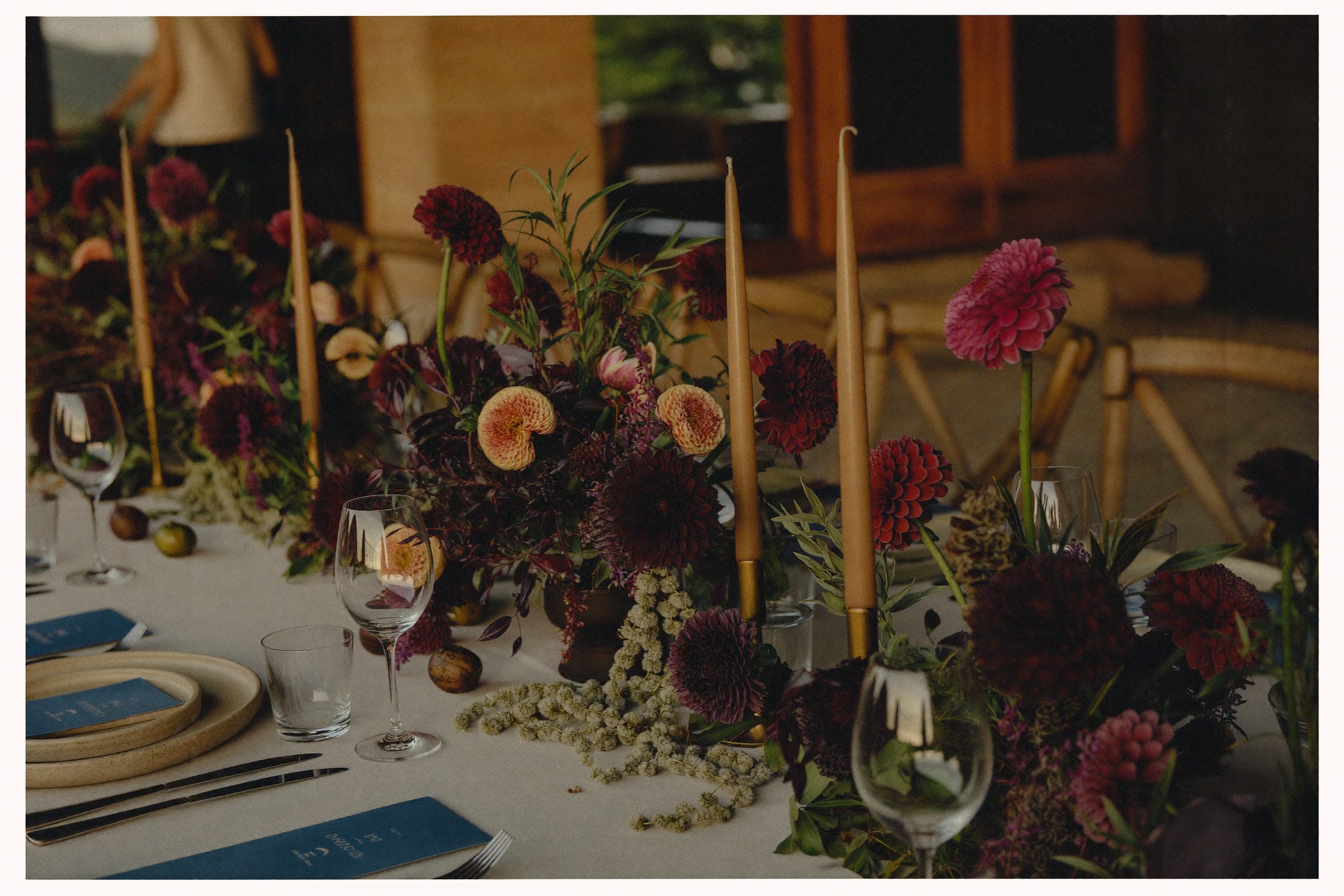
Put together, they feel layered and intimate. A tablescape in these shades looks like it has settled into the room rather than been dropped into it that morning. The effect is closer to a painting than a mood board, and it suits the way couples want their day to feel now, which is less like an event and more like the best dinner party they have ever thrown.
Why they work so well in an Australian setting
There is a practical reason these tones are landing here in particular. Australian light is strong and warm, and it can flatten a pale palette into something washed out by the middle of the afternoon. Deeper colours hold their own against that light. A merlot napkin or a fig-toned bridesmaid dress keeps its richness at two in the afternoon in a way that a blush tone often will not.
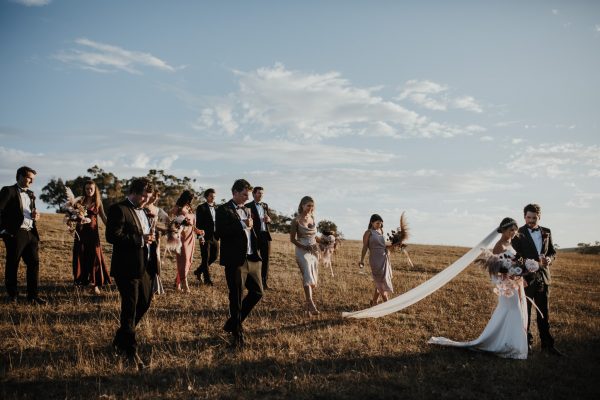
They also sit beautifully against the landscapes couples are actually marrying in. Olive against eucalypt looks like it belongs. Plum and merlot glow against sandstone and against the golden hour that arrives late on a summer evening. If you are marrying in autumn or winter, when so much of the Australian wedding calendar now sits, these tones read as seasonal rather than forced.
How to use them without tipping into heavy
The mistake with a rich palette is treating it like a theme and drenching everything in it. A room where every single element is merlot starts to feel like a stage set. The couples doing this well are using depth as a base and then lifting it.
The simplest approach is to choose two of these tones and let them lead, then allow the neutrals you were going to use anyway to carry the rest. Fig and olive across the linen and the florals, with candlelight, bone crockery and clear glass doing the lightening. That contrast is what stops the look from feeling weighed down.
Florals are where the palette earns its keep. A bouquet built from two or three tones in this family, something like a dahlia in deep plum, a touch of rust and plenty of olive foliage, has a moodiness that a pastel bouquet cannot match. Keep the flower types limited and let the colour do the work.
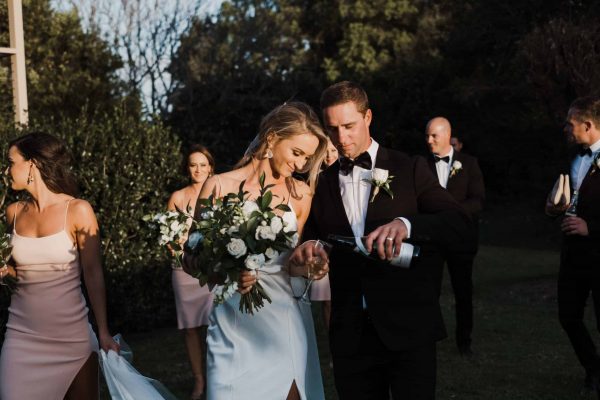
Fashion is following the same logic. Together Journal note the rise of tonal tailoring and softer suiting in shades like dusty rose and warm earth tones, which means the palette no longer stops at the table. A groom in a warm brown or a soft olive suit sits inside the colour story rather than standing apart from it, and the whole day looks considered as a result.
A palette that ages well
The quiet argument for rooted romance is that it will date gracefully. Trend-driven brights can look pinned to a particular year the moment they are photographed. These deeper, nature-drawn tones have been showing up at good tables for centuries, which is rather the point. In ten years the photographs will read as rich and intentional rather than as a snapshot of what was popular the season you married.
If a fully neutral wedding never quite felt like you, this is the year to trust that instinct. Start with the two tones you keep coming back to, build the rest of the room around candlelight and natural texture, and let the colour carry the warmth. It is a small shift on paper and a considerable one in the room.