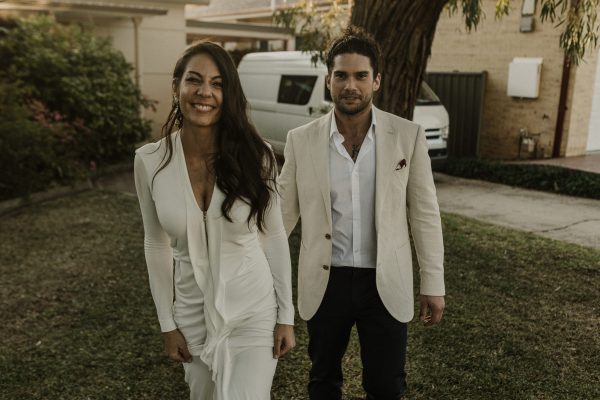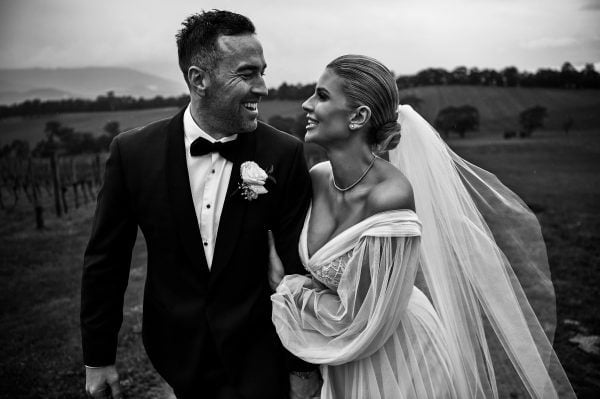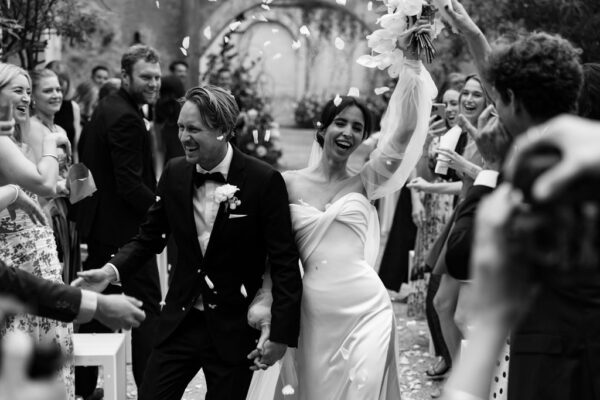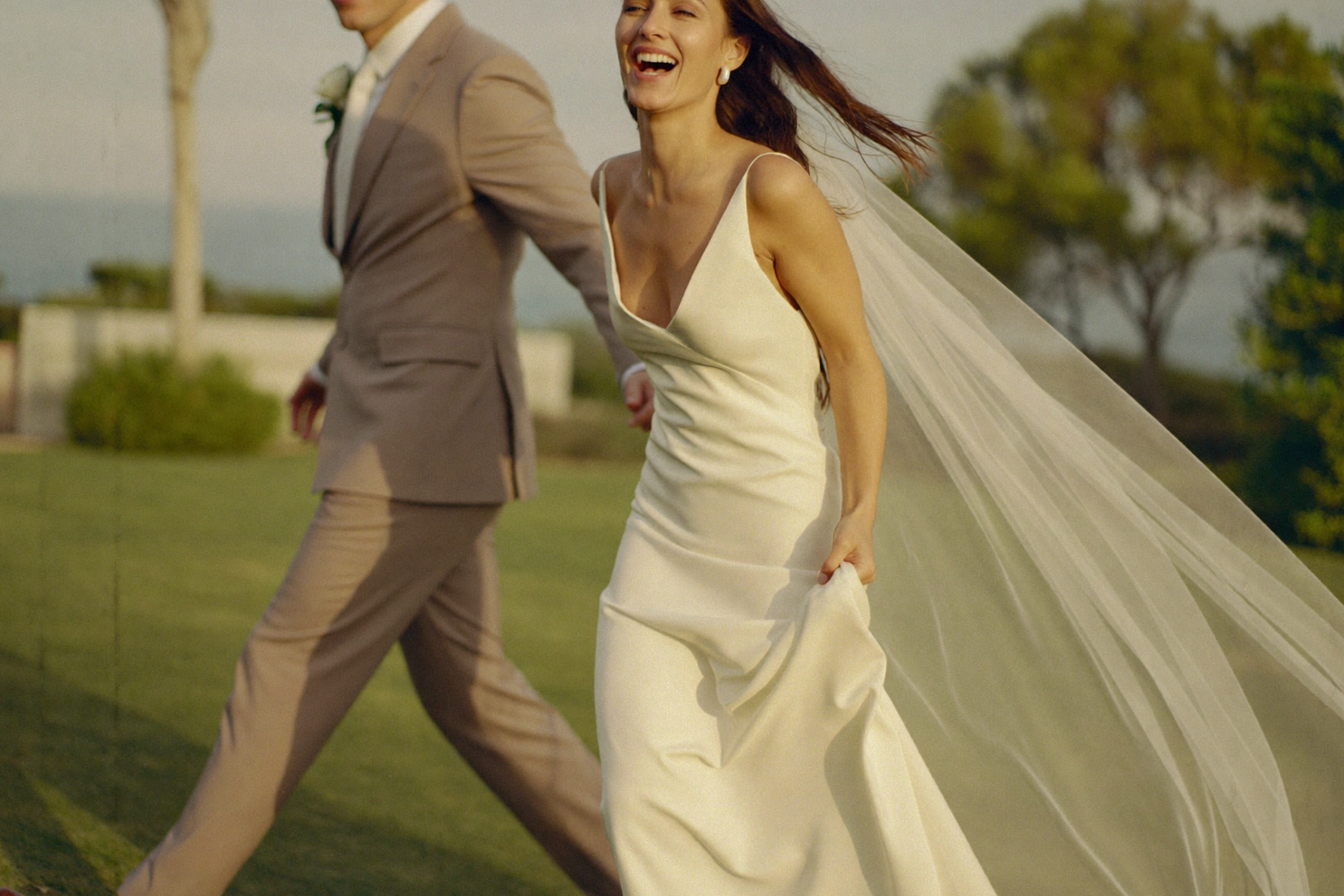
Something has changed in the way couples want to remember their day. The endless gallery of perfectly lit, perfectly posed portraits is giving way to something looser and more honest. Photographs that look like a memory rather than a magazine cover. Across the most stylish Australian weddings right now, the documentary approach is leading, and film is quietly coming back with it.
Away from the highlight reel
For years the goal was flawless. Every hair in place, every chin angled, every guest arranged. The pictures were lovely, and also slightly airless, because real feeling tends to happen in the seconds before and after the pose, not during it. Couples are noticing this. They are asking their photographers for fewer set ups and more observation, for the in between moments where someone is laughing too hard or wiping away a tear or simply leaning into the person beside them without being told to.
This shift sits inside a broader move away from perfection. Engagement shoots are starting to feel like a walk rather than a production. The day itself is being allowed to unfold at its own pace, with the camera following the emotion instead of staging it. The result is a record that feels like the wedding actually felt, which is, after all, the whole point.
Why film, and why now
The return of film is partly aesthetic and partly emotional. Film has a softness that digital still works hard to imitate. Gentle grain, forgiving highlights, colours that lean warm and a little faded, a quality that flatters skin and makes a frame feel timeless rather than tied to the year it was taken. There is a reason so many of the images couples save as inspiration carry that analogue warmth.
There is also something about the discipline of film that suits this moment. A photographer shooting film cannot fire off two hundred frames of the same moment. They wait, they watch, they choose. That patience tends to produce images with more feeling in them, because each one had to be worth the frame. Many photographers now shoot a hybrid of digital and film, using digital for coverage and film for the handful of images that will end up framed on a wall. You do not have to choose one or the other.
The analogue table, beyond the camera
The appetite for a lo-fi, sentimental feeling is showing up well beyond the professional photographs. Couples are scattering disposable cameras across the tables again and letting guests capture the night from their own angle. Camcorders and grainy video are reappearing, prized for exactly the slightly rough, of the moment quality that polished cinematography smooths away. Some couples are setting up a small video guestbook where friends record a short message to be replayed years later.
These touches work because they invite participation. A guest with a disposable camera in hand is paying a different kind of attention than a guest scrolling a phone. The pictures that come back are blurry and badly framed and completely wonderful, full of the people who matter caught off guard. There is a warmth in that imperfection that no styled set up can manufacture.
How to plan for it without losing the day
Choosing a documentary approach does ask a little of you in the planning. The single most useful thing you can do is give your photographer time and freedom. Candid images need room to happen, which means building a timeline that is not packed so tightly that every minute is accounted for. A relaxed morning, an unhurried hour somewhere quiet after the ceremony, a reception where people are actually allowed to sit and talk, these are the conditions in which the best unposed photographs are made.
It also helps to meet your photographer properly beforehand. A documentary photographer is going to be close to you in your most unguarded moments, so a sense of ease between you matters more than any shot list. When you trust the person holding the camera, you forget they are there, and that forgetting is exactly what makes the pictures sing.
A short word of caution on the film question. Film takes longer to come back than digital, often several weeks, so be patient with the wait. Ask your photographer how they handle it and how they back up their work, because the romance of analogue still needs a sensible safety net behind it.
What you are really keeping
In the end this trend is less about a particular camera and more about a feeling. Couples want to look back and recognise themselves, not a polished version arranged for the lens. They want the laugh that was too loud, the parent who could not hold it together during the speeches, the late hour when the shoes came off and the dancing got silly. Film and the documentary eye are simply the tools that catch those things best. The day was always going to be imperfect and fleeting. The most beautiful photography just lets it stay that way.