There is a particular kind of silence that falls over a room when everyone is looking at a phone. Most couples have felt it at someone else’s wedding, that half hour after the ceremony when guests drift apart to check messages and upload photos, and the energy of the day quietly leaks away.
The response to that, across weddings we are seeing at the moment, is not a phone ban or a stern sign at the door. It is something far more generous. Couples are giving guests something to do with their hands.
The return of the tangible
Disposable cameras on the tables. A video guestbook running in the corner where people can leave a message for the couple to watch years later. A wedding newspaper printed with the story of how you met, the running order of the day, a crossword full of inside jokes. Matchbooks. Handwritten place cards that guests are invited to take home. A projector throwing family photographs onto a wall while the band sets up.
None of this is new, exactly. That is rather the point. What has changed is the intention behind it. These details are being chosen because they slow the room down and give people a reason to talk to one another, not because they photograph well, although they almost always do.
Pinterest’s 2026 wedding report, unpacked in detail by Together Journal, points to the same shift. Searches for analogue photo booths, video guestbooks, wedding mailboxes, printed games and camcorder footage have all climbed sharply. The mood being described is lo-fi and sentimental, a little grainy, closer to a home movie than a highlight reel.
Why it works so well in practice
A wedding is a strange social event. You are asking a hundred people, many of whom have never met, to feel comfortable together for eight hours. Structure helps. So does anything that gives a guest a small job.
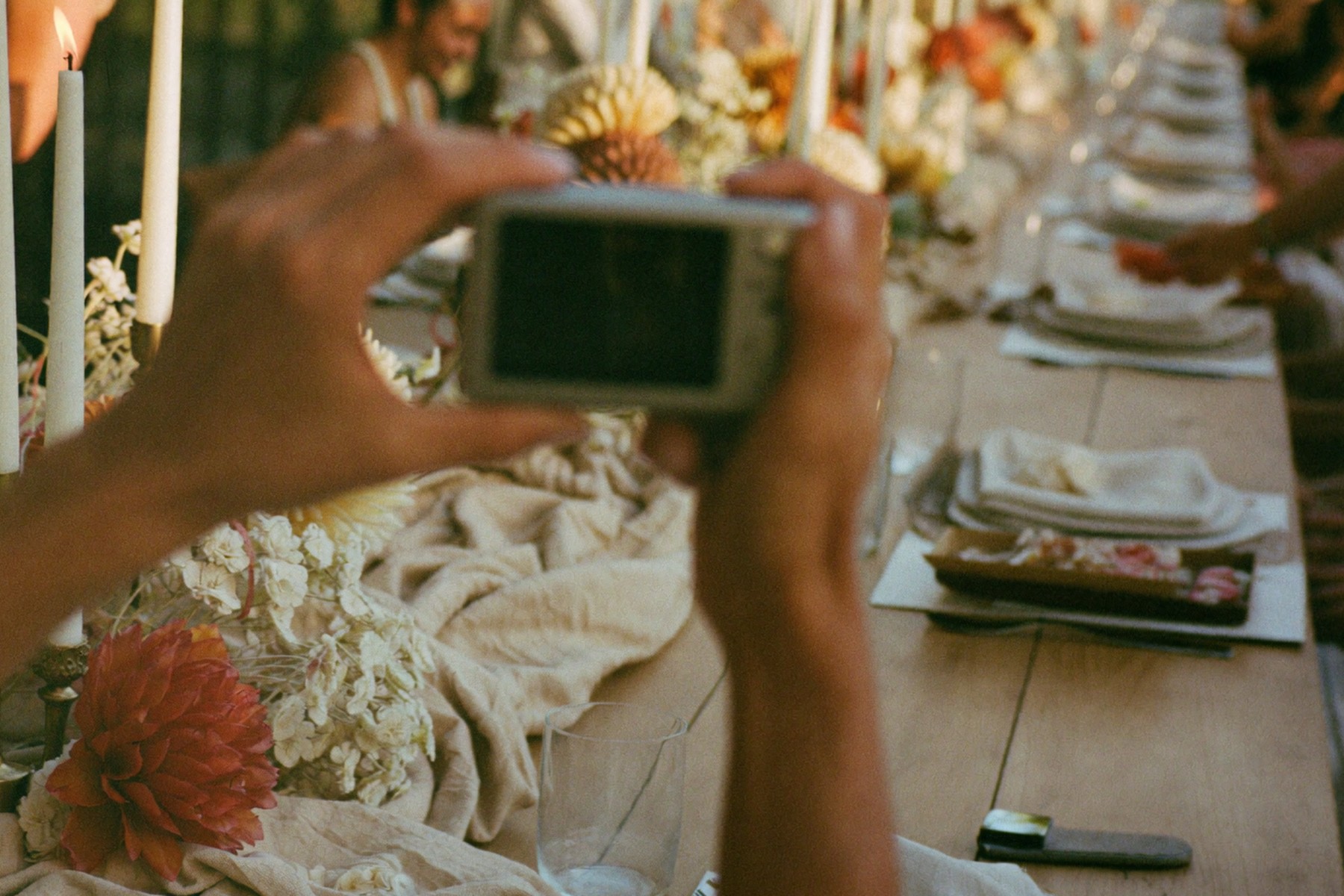
Hand someone a camera and they become a participant rather than an audience member. Set up a table with pens and cards and a request for advice on the first year of marriage, and you will find the quietest guest at the wedding sitting there for twenty minutes, writing something you will keep forever. The activity is the point, but the artefact it leaves behind is the gift.
There is a practical argument here too. Guest photography has been part of weddings for years, usually in the form of a hashtag and a scattering of phone shots that nobody ever collects. A camera on the table produces a roll of film that lands in your hands a fortnight later, unedited and unfiltered, full of the moments your photographer was never going to see. The dance floor at 11pm. Your uncle asleep in a chair. The thirty seconds before you walked in.
Doing it well rather than doing all of it
The risk with this direction is obvious. Ten activities across a reception starts to feel like a school fete, and guests end up managing a schedule rather than enjoying an evening.
Two things, done properly, will do more than eight things done casually. Choose the ones that suit the way your people actually behave. A family full of talkers will fill a video guestbook and leave the cameras untouched. A crowd that loves a competition will play a lawn game for two hours and never write a card. You know them. Plan for who they are rather than who a mood board says they should be.
Placement matters more than most couples expect. An analogue photo booth tucked into a corridor will be used by three people. Put it where the drinks are, or near the entrance to the dance floor, and it becomes part of the flow of the night. Anything that requires reading instructions will be ignored, so keep the ask to one line.
And consider what happens the next morning. Someone has to collect the cameras, gather the cards, pack up the guestbook. Give that job to a person who is not you, and give it to them in writing before the day.
The keepsake that keeps working
The reason this idea has staying power has little to do with nostalgia and everything to do with what a wedding is for. You are not building a set. You are building a memory, and memory holds on to things that were touched, written, laughed over and taken home.
Australian couples have always been good at the informal end of celebration, the backyard and the long table and the party that goes until the neighbours give up. This trend fits that instinct rather neatly. It asks very little, it costs comparatively little, and it hands your guests a small role in a day that might otherwise sweep past them.
Ten years from now, the film will have faded a little and the handwriting on the cards will look older than you remember. That is exactly what makes them worth keeping.