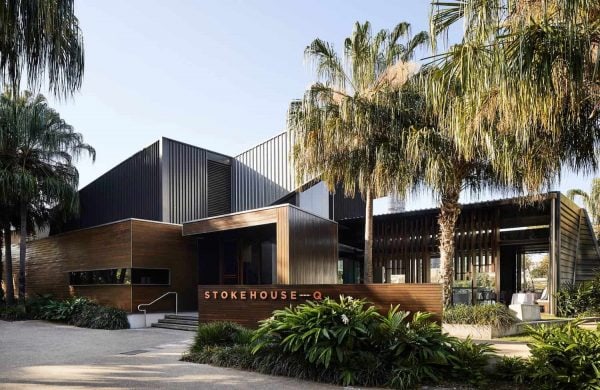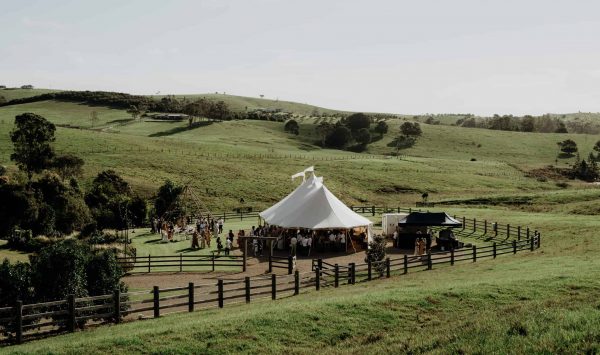
Most couples begin their venue search by looking for somewhere that is beautiful. A smaller group begins by looking for somewhere that is empty. A warehouse, a gallery, a heritage hall, a paddock with a marquee. They want a space they can shape and a team they have chosen themselves.
This approach is known as dry hire. You pay to use the space, and you bring in your own caterer, bar service, florist, furniture and often your own staff. Bridebook’s 2027 forecast reported a sharp rise in searches for dry hire venues in the UK this year, linked to couples wanting more control over who supplies what. It is a trend with plenty of appeal in Australia as well, where many couples already hunt for galleries, farm sheds and creative spaces with good bones.
What you gain
The first benefit is freedom. In an all-inclusive venue you often work from a set menu, a preferred supplier list and a fixed layout. In a dry hire space you can choose a caterer whose food you love, a bar team who understand your taste and a stylist who knows how to work with raw concrete or timber beams. The result feels like your wedding rather than a package.
The second is flexibility around the date and the schedule. Many dry hire spaces give you a full day or even a weekend for set-up and pack-down, which can ease pressure on the morning of the wedding. Some are also open to a longer evening, depending on council rules and neighbours.
The third is atmosphere. Industrial and gallery spaces tend to have strong natural light and clean lines, so you need fewer decorations to make them look intentional. A long table with good linen, a few tall candles and some loose seasonal stems can look quietly dramatic against a plain wall.
What you take on
Freedom comes with work. Someone has to coordinate the suppliers, and that someone is either you or a planner. A venue that does not supply tables, chairs, crockery, glassware, toilets or kitchen equipment will need all of it brought in. Hire costs add up, so build a full budget before you decide the space is cheaper.
Check the practical things first. Ask about power supply and whether it can handle catering equipment and lighting. Confirm toilet numbers, water access, parking and noise curfews. Find out what insurance is required and whether your suppliers hold public liability cover. Your venue may require a licensed bar and the correct liquor permits, which your caterer or bar service can usually help with. Ask about wet weather plans if any part of the day sits outdoors.
Heating and cooling deserve their own conversation. A concrete warehouse is magnificent in autumn and very hard to love in the middle of a summer heatwave or a cold July evening. Ask what is available, and what it costs to hire.
Who it suits
Dry hire suits couples who enjoy planning and have a clear picture in mind. It also suits those who know their suppliers well or are happy to take advice from a planner. If you want one person to look after everything on the day, an all-inclusive venue may feel calmer.
A good test is to walk the empty space and imagine the day from the first guest arriving to the last song. If you can see it, and you can see who you would call to make it happen, the blank canvas is worth serious consideration.
Questions to ask on inspection
Ask what time you can access the space and how long you have to pack down. Ask who is responsible for waste removal and cleaning. Ask whether there is a bump-in route for large items. Ask for a copy of the hire agreement before you pay a deposit and read the cancellation terms carefully.
An empty room asks a lot of you, and it gives a lot back. For the right couple, it is the most personal way to marry.