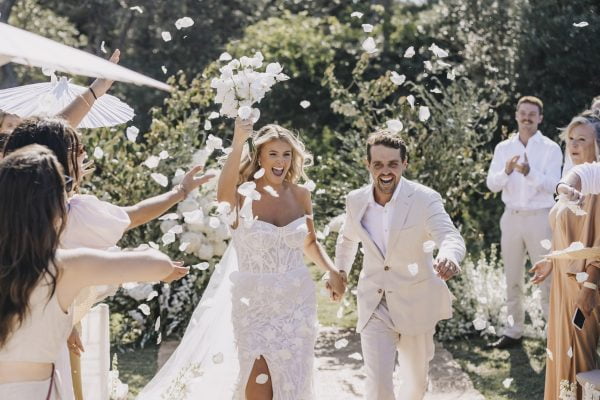
There is a shift happening in wedding florals, and it has little to do with size or spend. Across the world’s leading wedding editorials, the same idea keeps surfacing. Flowers are being asked to look like they grew that way, not like they were arranged for a camera.
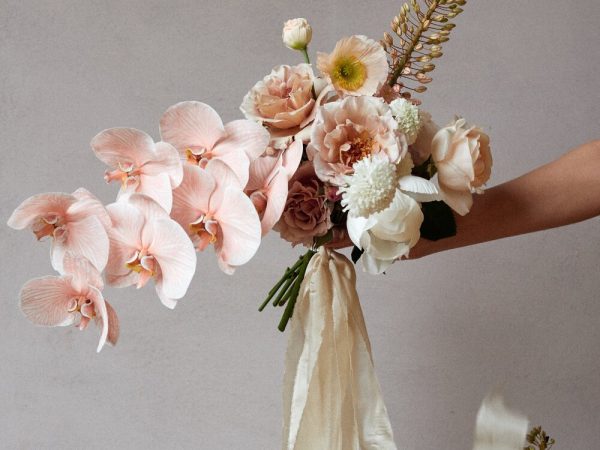
For years, the benchmark bouquet was round, tight and symmetrical. Every stem faced the same direction. Every bloom sat at the same height. It photographed beautifully, but it rarely looked like anything you would find growing in a garden. That is changing. Florists are now building with natural movement in mind, letting stems fall at different lengths, mixing textures that would never have shared a vase a few years ago, and leaving in the imperfections that make a bouquet feel alive rather than manufactured.
Structure without stiffness
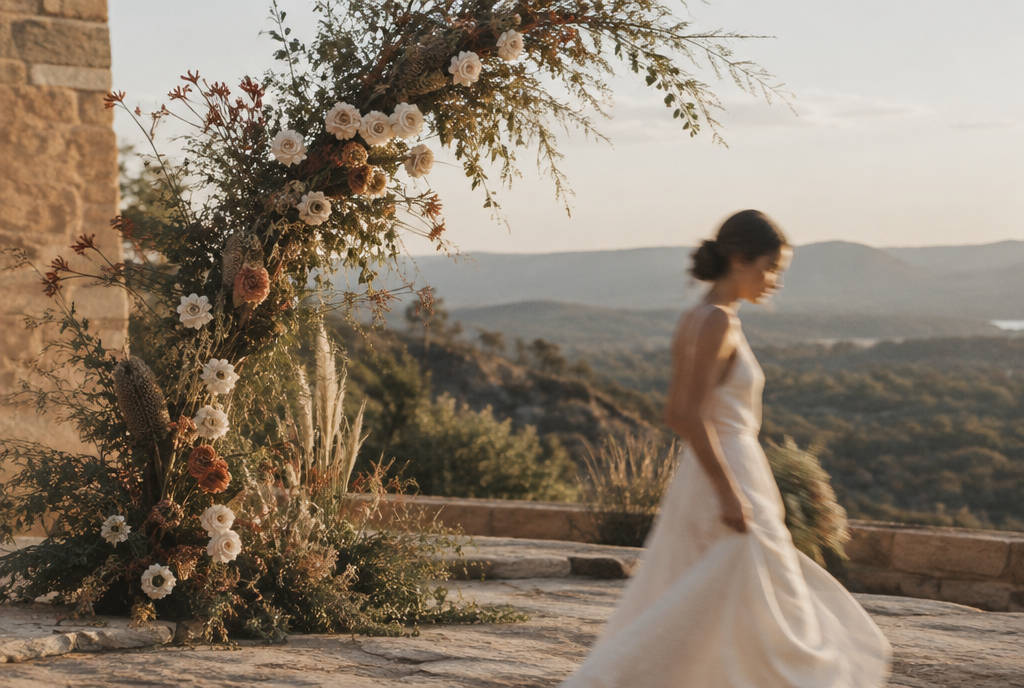
The florals getting the most attention this year still have architecture to them. Sculptural installations, suspended florals over a table, and asymmetric arches remain popular. The difference is in the detail. Where a structure once relied on symmetry to feel impressive, it now leans on scale, texture and a sense of movement instead. A single oversized arrangement with loose, trailing stems can carry more presence than a wall of uniform blooms.
For couples working with a florist, this is worth raising early. Ask to see examples of their looser, more textural work rather than only their most photographed pieces. A skilled florist will have a distinct point of view on movement and negative space, and that point of view is often more telling than a portfolio full of picture-perfect symmetry.
Seasonal and local is having a real moment
Australian florists have long championed native and seasonal stems, and that instinct is now aligning neatly with what is trending internationally. Kangaroo paw, native grasses, trailing greenery and unexpected foliage are being used not as filler but as the main event. This is partly aesthetic and partly practical. Seasonal, local flowers hold up better in Australian heat, cost less to source, and tend to look more considered than imported blooms forced into an arrangement they were never suited to.
If you are planning a wedding here, lean into what is genuinely in season for your date and region rather than chasing a bloom you saw on an overseas account. Your florist will thank you, your budget will stretch further, and the result will likely suit your setting far better.
The bouquet as a personal object, not a prop
Perhaps the most interesting change is in how bouquets are being talked about. Rather than a finishing touch to match the dress, they are increasingly treated as a personal object with its own story. Sentimental additions such as a grandmother’s brooch, a swatch of fabric from a family garment, or a single stem tied to where the couple met are becoming more common, tucked in rather than announced.
This is a useful thing to sit with early in your planning. Before you send your florist a folder of inspiration images, think about what you actually want to be holding as you walk towards your partner. Does it need to match the tablescape exactly, or is there room for something that means more to you than it does to anyone watching.
Bringing it into your own wedding
You do not need a large florals budget to take something from this shift. A smaller, looser bouquet with a handful of well-chosen stems can feel more considered than a larger, tightly structured one. Ask your florist about seasonal availability before you fall in love with a specific bloom. And give yourself permission to let a few stems sit slightly off centre. That asymmetry is not a flaw to correct. It is increasingly the whole point.
Whatever direction you take, the floral trend worth borrowing from 2026 is not a colour or a specific flower. It is the instinct to let things look a little more like they belong in the world, rather than staged for a single photograph.