There is a growing number of couples who say their vows well before the wedding everyone else is invited to. They marry on a weekday morning at a registry office, or in a living room with a celebrant and two witnesses, then go to lunch. Weeks or months later comes the celebration, with the dress, the long table and every person they love in one room.
The Bridal Journey named it one of the defining shifts heading into 2027, calling it the moment the legal wedding and the party began to separate. It is easy to see why the idea is catching on. The two halves of a wedding ask very different things of a couple, and splitting them lets each one breathe.
Why split the day at all
A traditional wedding asks the ceremony to do a great deal. It has to be legally correct, emotionally meaningful and visually beautiful, all in front of a crowd and usually on a tight schedule. For some couples that works perfectly. For others, the most private moment of their lives ends up feeling like a performance.
Marrying first in a small, quiet setting takes that pressure off. The vows are said to each other, with only the people who need to be there. When the big celebration arrives, it can be given over entirely to the guests, the food and the dancing, because the serious part is already done.
There are practical reasons too. Couples marrying overseas often find it simpler to complete the legal side at home first. Others want to be married by a certain date for family, visa or personal reasons, while the celebration they have in mind needs more time to plan. Some simply like the idea of a wedding anniversary that belongs only to them.
What the law asks of you
In Australia, the legal requirements are the same whether you marry in a registry office or on a clifftop. You will need to lodge a Notice of Intended Marriage with your celebrant or registry at least one month and no more than 18 months before the ceremony. You will also need two witnesses aged over 18, and the ceremony must include the words required under the Marriage Act.
State and territory registries of births, deaths and marriages offer their own ceremony rooms and small-scale services, and many independent celebrants run short legal-only ceremonies designed for exactly this purpose. Check the booking lead times in your state, as popular dates can fill well ahead.
If your larger celebration will also include a ceremony, it is worth being clear with guests that it is a commitment or blessing rather than the legal marriage. Most couples find a light touch works best. A line on the invitation or a word from the celebrant on the day is usually enough.
Dressing for the smaller moment
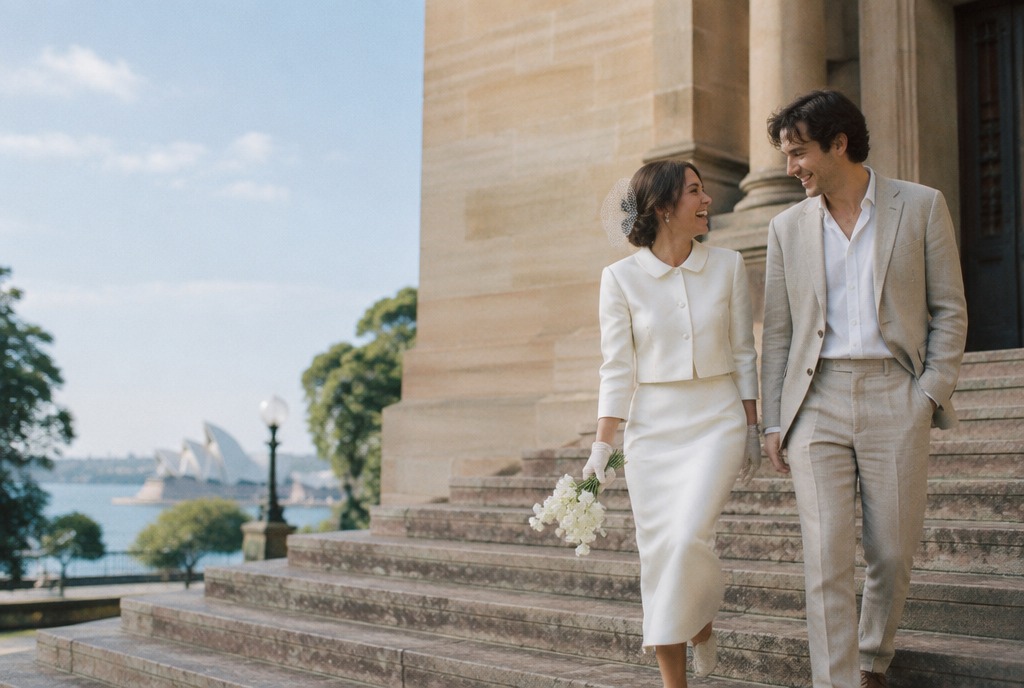
The fashion side of this trend is where it gets interesting. A registry office wedding is an invitation to dress in a completely different register from the main event. Think tailored ivory separates, a sharp skirt suit, a bias-cut slip in silk or a structured midi with a short veil or a hat. Gloves, a single strand of pearls and a small posy rather than a full bouquet all suit the scale of the room.
It also means two looks without the pressure of a costume change on the day. The ceremony outfit can be something you will genuinely wear again, while the celebration gown can be as romantic or dramatic as you like. For partners, a well-cut suit in stone, chocolate or navy works beautifully at the registry, with black tie or softer tailoring saved for the party.
Making the quiet day feel like an occasion
A small wedding can still be a beautiful one. A few ideas that help it feel intentional:
- Book a photographer for an hour, even if nobody else is there. Those images often become the favourites.
- Plan somewhere lovely to go afterwards, whether that is a long lunch, a picnic or a quiet bottle of champagne at home.
- Choose one or two meaningful details, such as a family ring, a handwritten set of vows or a single flower from a parent’s garden.
Bringing the two together
When the celebration comes around, there are gentle ways to connect it back to the first day. Some couples play a short recording of their vows during speeches. Others display a few photographs from the registry at the entrance, or have their witnesses give a toast. It lets guests share in a moment they were not present for, without turning it into a reenactment.
The appeal of marrying twice comes down to choice. It gives couples a way to protect the intimate part of getting married while still throwing the party they have always imagined. If the idea of saying your vows in front of 150 people has never sat quite right, it is worth knowing there is another way to do it, and that it is entirely legitimate.