For a long time, the wedding was a single event. One date, one venue, one guest list, and a very long day to hold it all together. A growing number of couples are splitting that day in two. A small, quiet ceremony first, then a larger celebration at a time and place that suits the party.
Bridebook’s 2027 forecast points to the rise of registry office weddings, often followed by a separate, larger celebration. It reports that these ceremonies made up 12 per cent of UK weddings in 2025, up from 9 per cent in 2024. Those figures describe the UK, but the pattern is familiar to anyone planning here. Couples are separating the legal moment from the party, and many say it takes the pressure off both.
Why splitting the day works
A ceremony is intimate by nature. When it is held in front of a few people, the vows feel closer and the emotion is easier to sit in. There is no schedule pressing at the door and no crowd to perform for.
The party has different needs. It wants space, music, food and time. Without a ceremony squeezed in beforehand, it can start when the energy is right, and it can run on its own rhythm.
The split also gives you flexibility. You might marry on a quiet weekday at a registry office or in a garden, then host the celebration months later when your favourite venue or your interstate family is available. Some couples find it helps with budget, because the large event can be planned with a longer runway.
Choosing who comes to the first part
This is the hardest decision, so settle it early. A common approach is to invite only immediate family and a few close friends. Another is to marry with just two witnesses and share the news afterwards. Either is fine. What matters is that you are consistent and kind about it.
Tell people before the day, not after, if you can. A short, warm message that explains the plan removes most of the awkwardness. Let guests know there will be a celebration for everyone, and give them a date even if the details are still taking shape.
Making the ceremony feel like a wedding
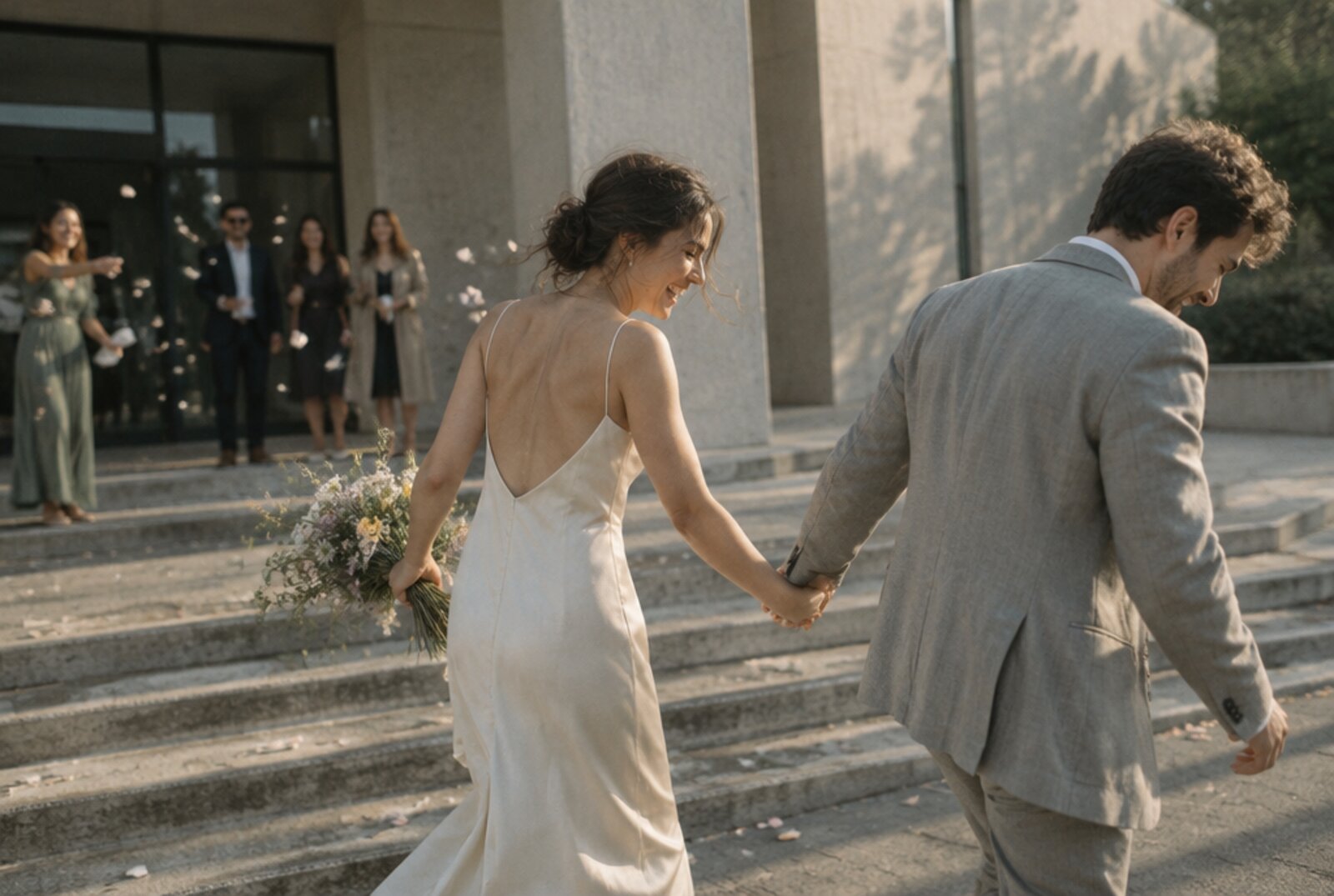
A small ceremony still deserves care. Choose clothing that feels right, even if it is simpler than what you will wear later. Book a photographer or ask a friend with a good eye to capture the moments. Bring a small bunch of flowers. Plan lunch or dinner afterwards, even if it is only a long table at a local restaurant.
Check the practical requirements well ahead. In Australia, couples must lodge a Notice of Intended Marriage with an authorised celebrant at least one month before the ceremony, and you will need to bring proof of identity. Confirm the current requirements with your celebrant, and ask about witnesses and timing.
Designing the party
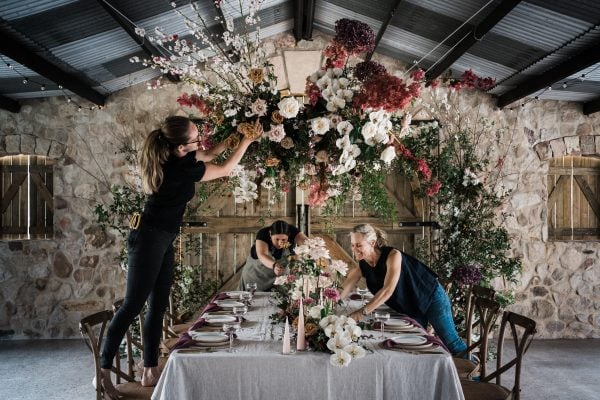
The second event is your chance to do the things a formal ceremony does not allow. A long table, a dance floor, a favourite band. Because the legal part is already done, you can open the evening with a toast instead of a processional.
Consider how you will bridge the two. Some couples wear the same outfit to both. Others change into something looser for the party. A short speech about the day you married helps guests feel included in the story even though they were not there.
Think about timing. A gap of a few weeks keeps the momentum. A gap of a year can make the party feel like an anniversary, which has its own charm. Keep your invitations clear about whether the event is the wedding celebration or a reception for a marriage that has already happened.
Is it right for you?
If the idea of a single large day feels heavy, this structure may be the answer. It lets you give your vows the quiet they deserve and gives your friends a night worth dressing up for.
Talk through what each of you wants from both parts. Then make a plan that honours both.