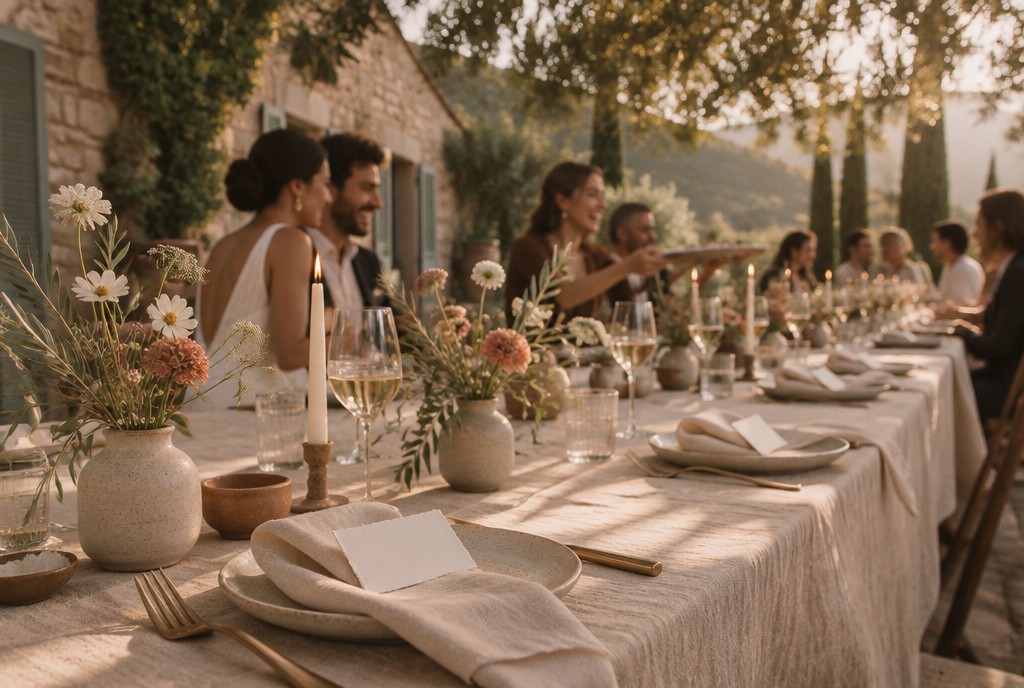
The seating plan has a reputation as the most dreaded task in wedding planning. It involves spreadsheets, family history and the sudden realisation that your oldest friend and your cousin have never met. Yet it is also one of the few parts of the day that shapes how every single guest feels.
Forecasts for 2027 suggest couples are paying it more attention. Who What Wear's look at next year's planning trends describes tables arranged around shared interests, and small personal gestures such as handwritten notes at each seat, in place of elaborate favours. The thinking is that a day built around intimacy and storytelling should extend to where people sit.
Start with conversation
A good seating plan answers a simple question. Who would enjoy talking to whom? Age and family branch are useful starting points, but they are rarely the whole answer. A table of people who all love cooking, or sailing, or old films, tends to find its own rhythm.
Write a short note about each guest. Where did they grow up, what are they into, who do they already know? Then look for overlaps. The aim is for every person to have at least two others they can talk to easily, so no one is stranded at the edge of a conversation.
Mix with care
There is a pull towards putting everyone with their own people, and it is understandable. But a table of colleagues, or a table of cousins, can feel like a side room at the party. Mixing a few groups with a natural link often works better. A friend from university and a neighbour who both garden, or two guests who both travelled through the same region.
Try to seat anyone who is attending alone next to someone warm and easy to talk to. If you can, introduce them in advance by message. A quick note saying that you have put two people together because you think they will get along is a small kindness that guests remember.
Think about the table itself
Shape changes the conversation. Long tables bring people close to the neighbour on either side, but can leave the ends feeling distant. Round tables make it easier for everyone to talk. Some couples are playing with less conventional layouts, such as clusters of tables or gentle curves, which break the room into more intimate pockets.
Whatever the shape, consider sound. A table next to the speakers will struggle with conversation, so keep older relatives and anyone who likes to chat away from the loudest part of the room. Equally, a table near the dance floor is lovely for people who will be up and out of their seats all night.
Where the couple sits
The head table is not the only option. Some couples now sit at a sweetheart table for two, which gives a moment of calm and a good view of the room. Others join a long table with their closest friends and family, which keeps them in the middle of the conversation. The choice depends on how you want to feel at the meal. If you want a private pause, choose the table for two. If you want to be surrounded, sit in the thick of it.
If you are splitting your time, plan to leave your seat. A walk between the tables during dessert, stopping for a few minutes at each, lets you speak to everyone without relying on a formal line.
Small touches at each seat
Place cards offer a chance to say something. A handwritten note, a short line of thanks or a small memory can turn a name into a message. If your handwriting feels messy, ask a friend with good penmanship or a calligrapher to help. Even a few words add warmth.
Menus can follow the same idea. A printed card that sits at each setting, with the dishes and perhaps a short note about why you chose them, gives guests something to keep. Keep the design simple, with a clean typeface and good paper, so it feels considered without competing with the table.
Practical things to settle early
Decide when you will lock the plan. Late changes from guests are common, and a deadline for the final numbers will keep things under control. Keep a spare seat or two in your records in case of last-minute additions, and share the final plan with your venue and caterer in good time so dietary needs are matched to the right chairs.
If the task still feels overwhelming, work on it in short sessions rather than a single evening. Move names around on paper, or use a free online tool if you like, and ask someone who knows your guests well for a second opinion.
A plan worth the effort
A seating plan is not the glamorous part of a wedding. But when it works, guests barely notice it. They simply find themselves in good company, with something to say and someone to say it to. That is what a good reception feels like.


