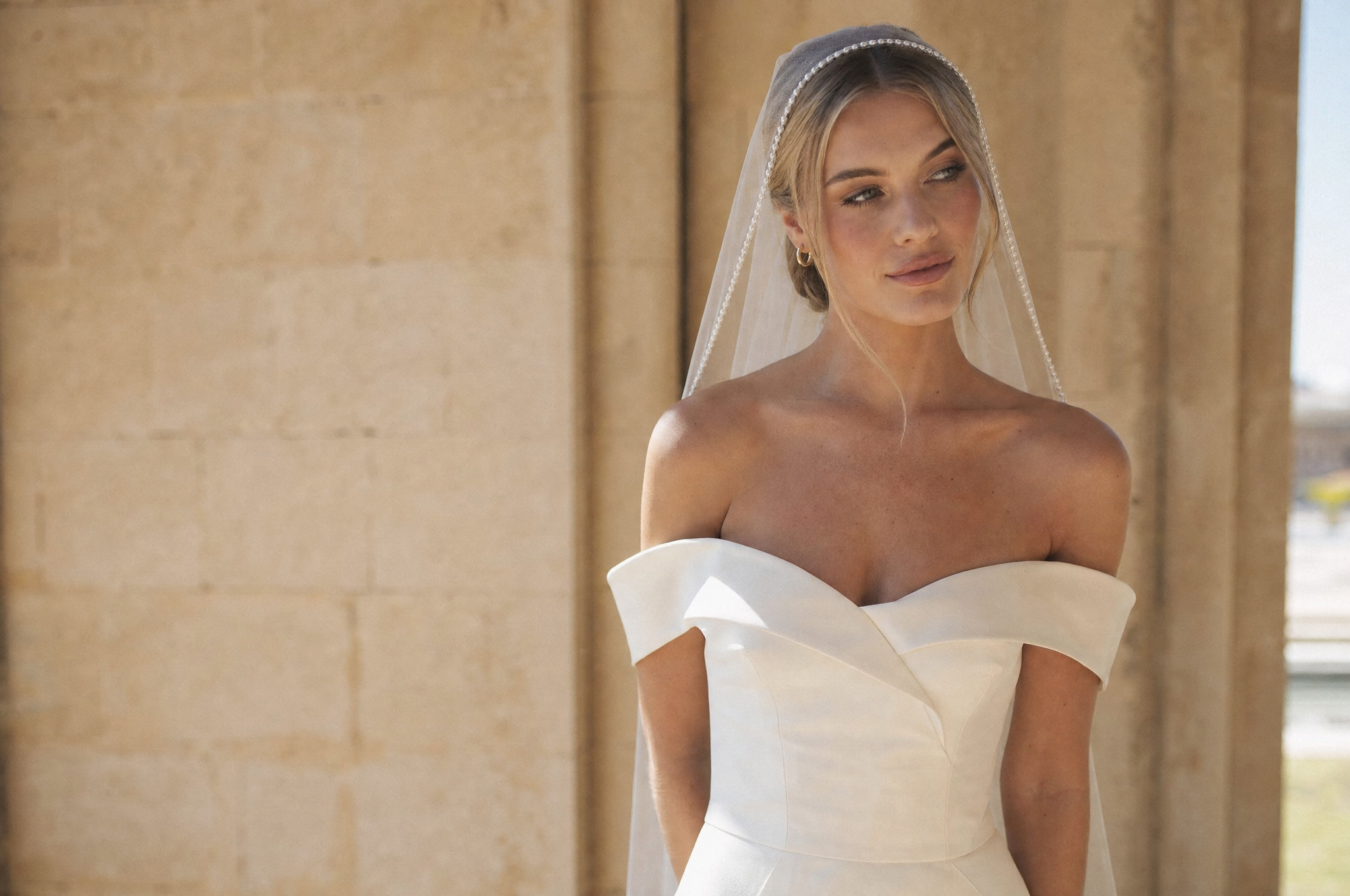
The veil spent a few seasons on the sidelines, replaced by loose hair, a single hairpin or nothing at all. That plain approach is being challenged. Vogue Weddings and The Bridal Journey have both pointed to a return of statement headwear for 2026, and not the simple cathedral length that used to be the default. The Juliet cap, the silk headscarf and the oversized lace hood are all reappearing on runways and real brides alike, treated less as an afterthought and more as one of the outfit’s central decisions.
It is a shift back toward headwear as a genuine style statement rather than a piece of tradition worn out of habit.
Why the plain veil lost ground, and why it is coming back
The minimalist years made sense as a reaction to the heavily embellished, cathedral length veils that dominated bridal fashion before them. Once every gown came with a matching long veil as standard, the alternative, a low bun and bare shoulders, felt fresh by comparison. But minimalism has a shelf life, and a decade of pared back bridal styling has left room for something with more presence to feel new again.
The current wave of headwear is not a return to the heavy, matchy veils of the past. It borrows instead from vintage and eveningwear, a fitted Juliet cap that sits close to the head and reads more like a piece of jewellery than a fabric, a silk scarf tied in the style of a 1960s starlet, or a dramatic hood that frames the face without needing a full veil underneath it. These pieces work because they add shape and intention to a bridal look without leaning on volume the way a full length veil does.
Finding the piece that suits your gown
Structured headwear pairs particularly well with the simpler, architectural gowns that have been dominant over the past few seasons, since a clean silhouette gives a statement piece somewhere to sit without competing for attention. A fitted Juliet cap or a close silk scarf works with a fitted column dress or a structured bodice in a way a soft, floaty veil does not, because both pieces are doing the same job, adding shape through construction rather than drape.
If your gown already carries a lot of detail, embroidery, a dramatic sleeve or a heavily textured fabric, a simpler headpiece is usually the better balance. The goal with any statement piece is for the eye to have one clear place to land, not two competing points of interest.
It is worth trying options in person rather than deciding from photographs alone. A Juliet cap that looks striking on a runway model can sit quite differently on a different face shape and hair type, and a scarf tied incorrectly reads as an accessory afterthought rather than a considered choice. Most bridal stylists are used to this request now and can talk through what will actually work with your dress rather than what is simply trending.
The practical side of a statement piece
A structured headpiece changes a few things about the rest of your day that are worth planning for. Hair needs to be styled to support the piece rather than the other way around, which often means booking a stylist who has specific experience with the style you have chosen rather than assuming any bridal hairdresser can execute it well. It is also worth trialling the full look, hair and headpiece together, well before the wedding, because these pieces tend to be less forgiving of last minute changes than a simple veil that can be adjusted on the day.
Weather and venue are also worth factoring in. A silk scarf can be a beautiful choice for an indoor reception but a genuinely difficult one for an outdoor ceremony with any wind at all, so it pays to think through where you will actually be wearing the piece rather than choosing on style alone. For Australian weddings, where an outdoor ceremony is still the default for a large share of couples, this is a conversation worth having with your stylist early rather than discovering the issue on the day.
A style choice, not just a tradition
What makes this trend worth paying attention to is less about the specific pieces and more about what it represents, a willingness to treat headwear as a genuine design decision again rather than a box to tick. Whether that means a vintage Juliet cap, a scarf borrowed from your mother’s era, or simply a considered choice to wear nothing at all, the point is the same. It should look like a decision, not a default.