For most of the past century, the wedding dress came with a colour already chosen. You could debate silhouette, sleeve and fabric at length, but the shade was rarely part of the conversation. That assumption is loosening. On the Spring 2027 runways in Barcelona and New York, bridal collections moved through pale blue, butter yellow, pistachio, lilac and dusty rose, and The Bridal Journey summed it up neatly: white is now one option among many.
It is a shift that suits Australian weddings particularly well. A soft colour can sit more naturally in coastal light or among the greens of a garden than a stark white, and it opens up choices for brides who have never felt entirely like themselves in ivory.
Colour as portrait, not protest
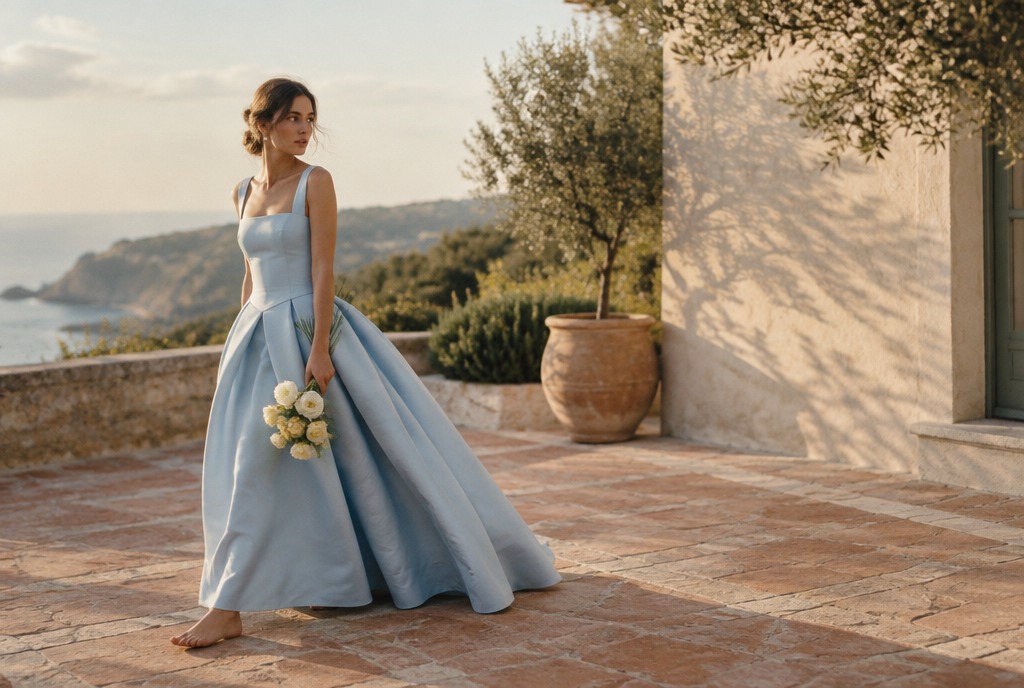
The most interesting thing about this moment is the tone of it. A coloured gown used to read as a statement against tradition. Now it reads as a considered choice. A bride in pale blue silk looks thoughtful rather than rebellious. The shades appearing most often are gentle, the kind that sit close to the skin and change with the light, rather than bold saturated colour.
Ivory Tribe’s 2026 fashion coverage noted the same direction from the other side, with warm neutrals like stone, champagne and soft almond leading the way, and muted shades such as dove grey, dusty blue and gentle blush appearing more often. What was daring a year ago, like champagne or blush, now sits at the conservative end of the range.
Finding the right shade for you
Choosing a colour for your gown is less about following the trend and more about what flatters you. A few things help.
Try colours on in natural light. Bridal boutiques are often lit warmly, and a shade that glows under their lights may look quite different outdoors. Ask to step near a window or outside, or take photos on your phone in daylight to compare.
Consider your skin’s undertone. Cooler skin tones often suit icy blue, lilac and silver grey. Warmer undertones tend to glow in butter, peach, champagne and soft gold. Neutral undertones can move between both. A consultant or stylist can help you see this quickly, and it is worth bringing someone whose eye you trust.
Think about your setting. A pistachio or sage gown can look extraordinary against sandstone or in a garden, while pale blue often sits beautifully by the water. Your venue’s palette, and the time of day you marry, will affect how your chosen shade reads in photographs.
Fabric changes everything
Colour behaves very differently depending on what it is printed or dyed onto. Structured silks such as mikado, duchess satin and faille hold a colour cleanly and give it depth, which is why they are appearing so often in coloured bridal collections. Tulle and chiffon soften a shade into something more ethereal, and layering sheer fabric over a lining in a different tone can create a colour that shifts as you move.
Lace in a coloured gown is worth seeing in person. Tone-on-tone lace, where the lace and base fabric are the same shade, can look very refined. A contrast base behind white lace gives a softer, more vintage feel.
Ways to bring in colour without committing fully
Not every bride wants to walk down the aisle in butter yellow, and that is fine. There are gentler ways to explore the idea:
- A second look for the reception in a soft colour, which suits the growing habit of changing outfits later in the day.
- A tinted veil or cape over a white or ivory gown.
- Coloured embroidery or a lining that only shows when you move.
- Shoes, gloves or a hair ribbon in a shade that carries through to your florals.
Planning around a coloured dress
If you do choose colour, share it with your key suppliers early. Your florist will want to build the bouquet around it rather than against it, and your photographer may adjust how they edit to keep the shade true. It is also worth thinking about what your partner and wedding party wear, so the palette works as a whole rather than competing.
Allow extra time for ordering. Coloured versions of a design may be made to order, and alterations can require matching thread or fabric. Ask about lead times at your first appointment.
The real point
The best reason to wear colour on your wedding day is the same as the best reason to wear anything: it feels like you. If you have always pictured yourself in white, there is nothing dated about it. But if you find yourself drawn to the pale blue gown on the rack, it is worth trying on. The rules around bridal colour have never been more relaxed, and the most memorable looks this season belong to the brides who chose with confidence.