For a few seasons, softness had the run of bridal fashion. Floating chiffon, barely-there slips, fabric that moved with the body rather than against it. That mood is not disappearing, but a firmer, more considered silhouette is moving in alongside it. The Ivory Tribe’s 2026 fashion coverage points to structured silks, duchess, mikado and silk faille among them, holding clean lines and architectural shapes without leaning on heavy embellishment to do the work. The gown itself is doing the talking.
It is a shift from adornment to construction. Rather than a dress that relies on lace, beading or a dramatic train for impact, the new silhouette gets its presence from the cut.
What structured actually means on the body
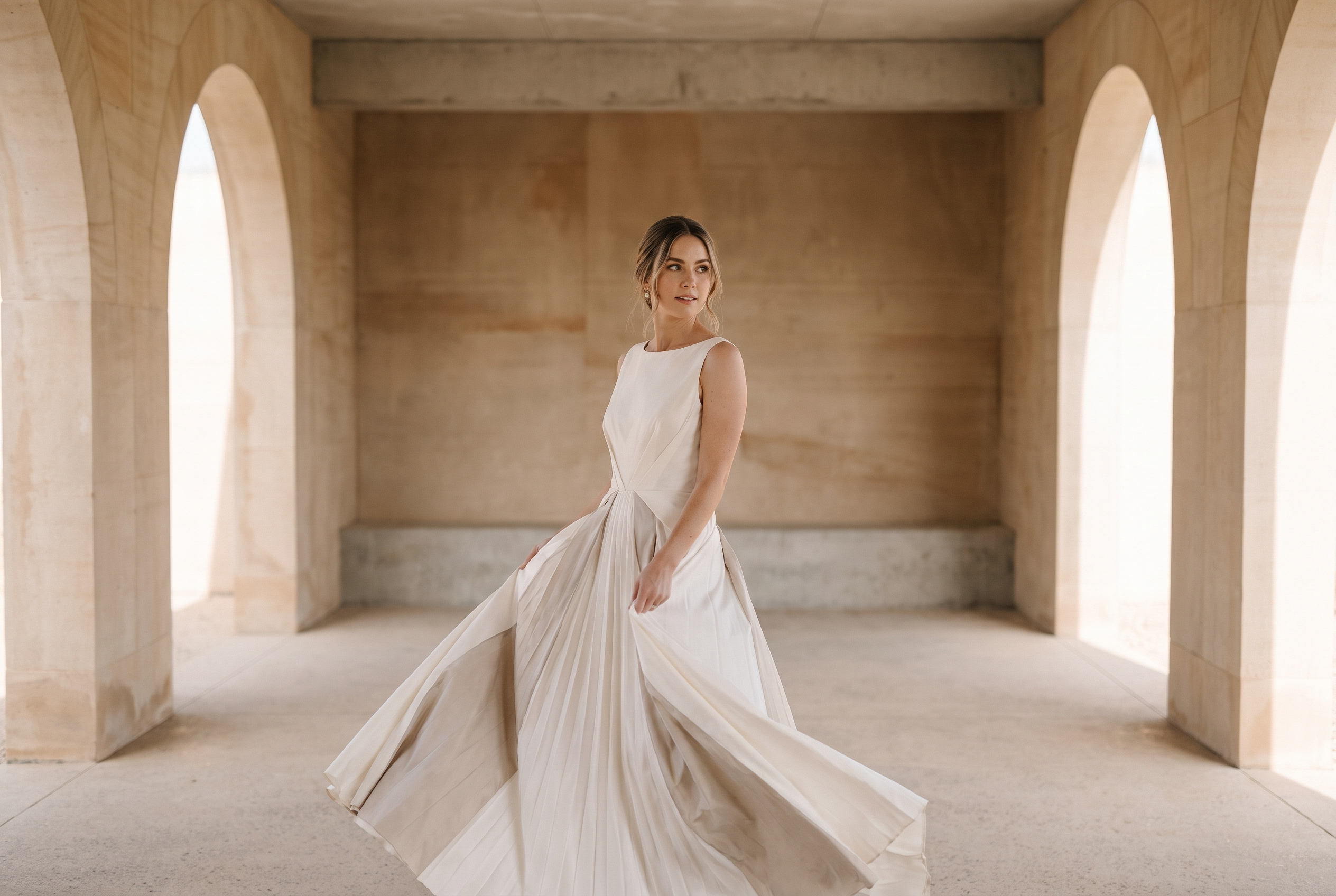
A structured gown holds its shape independent of the body underneath it. Where a bias-cut slip dress skims and drapes, a structured bodice or skirt is built with an internal architecture, boning, interfacing, a heavier weight fabric, that lets it stand away from the body in clean, deliberate lines. The result reads as considered rather than casual. A structured column gown or a sculpted bodice with a full skirt carries its own presence in a room, the kind that photographs well from every angle because the shape does not shift or collapse as the day goes on.
This does not mean stiff or uncomfortable. The better versions of this silhouette are built for movement, with structure concentrated through the bodice and waist while the skirt is left free enough to walk, sit and dance in. The architecture gives the gown its shape. It is not meant to restrict the person wearing it.
The palette that goes with it
Alongside the shift in construction, The Ivory Tribe also points to a move toward warmer, quieter neutrals, ivory, stone, champagne and soft almond, replacing the starker whites that have dominated recent years. These tones flatter a structured silhouette particularly well, because the fabric’s own texture and the way light falls across a clean seam become more visible without a stark white flattening everything into one plane. A duchess satin in warm ivory catches light differently to the same cut in bridal white, and against Australian light, whether that is harsh midday sun or the low gold of a late afternoon ceremony, the warmer tones tend to hold their character better in photographs.
Lace has not disappeared either, but it is being used with a lighter hand. French corded lace and fine embroidered tulle are appearing as an accent against a structured base rather than covering the whole gown, which keeps the silhouette feeling architectural rather than heavily bridal.
Choosing structure for your own shape
A structured gown is not a single universal shape, and the right version depends on what a bride actually wants a dress to do for her. Some want the drama of a full skirt built on a fitted, boned bodice. Others want something closer to a sharp column, structured through the torso but slim through the hip and leg. The common thread is a fabric with enough body to hold a line, which is worth discussing early with a stylist or designer, since not every silk behaves the same way once it is cut and sewn.
It is also worth trying a structured gown in person before ruling it out. Photographs of a dress on a hanger rarely capture how a well-built bodice sits against the body, and the difference between a gown that merely covers a shape and one that is built around it is something you feel the moment you put it on.
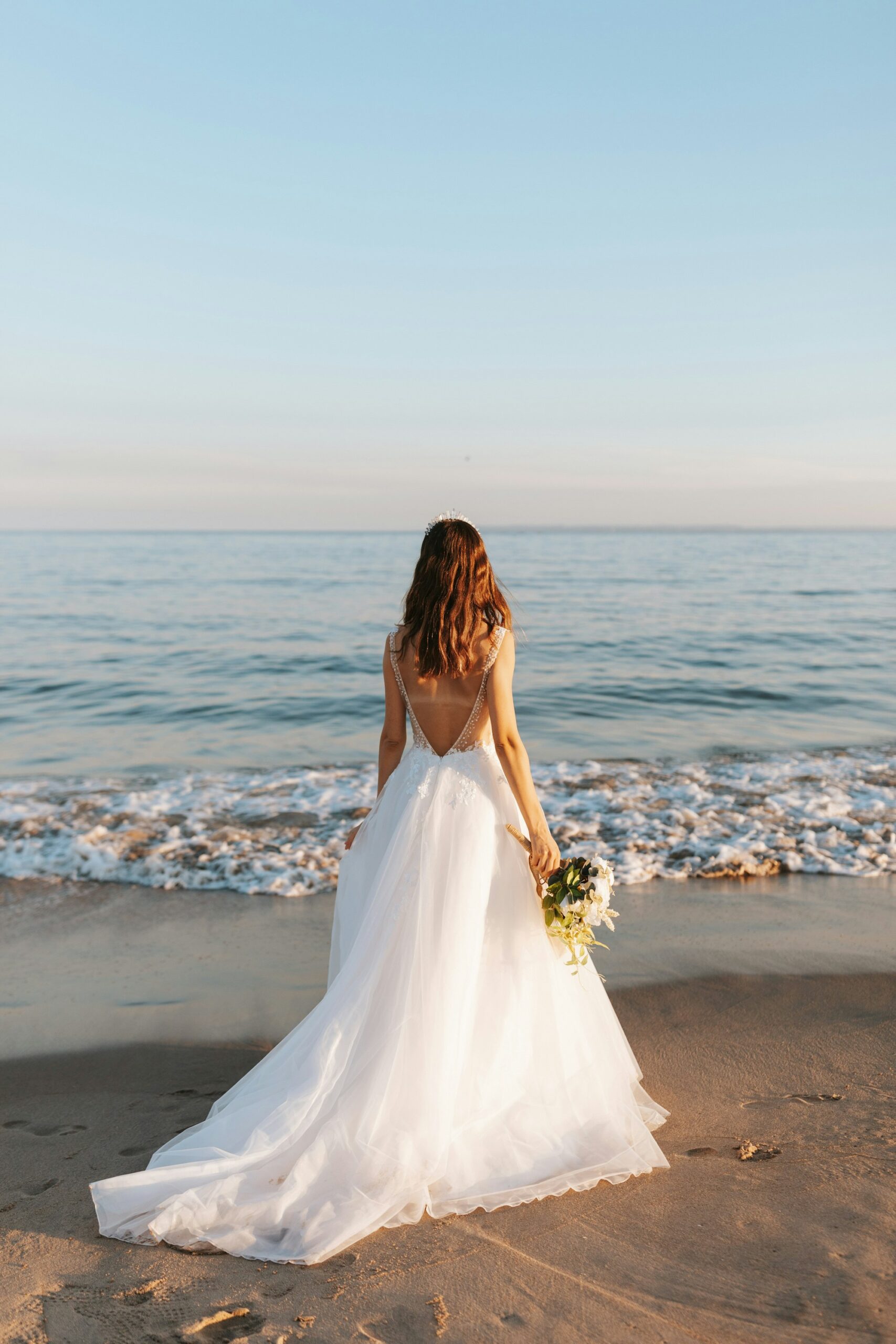
A quieter kind of statement
What is interesting about this shift is that it is not asking for more. There is no additional embellishment, no bigger train, no extra layer of detail. The impact comes from precision, from a seam placed correctly and a fabric with enough integrity to hold its own shape. For brides who want their gown to feel like the main event without leaning on decoration to earn that attention, a structured silhouette in a warm, considered neutral is shaping up to be one of the more quietly confident choices of the year.