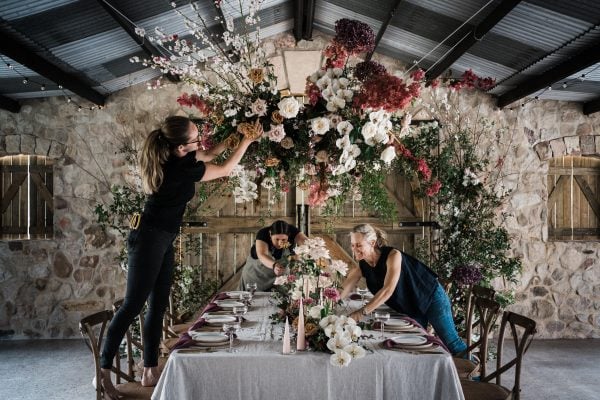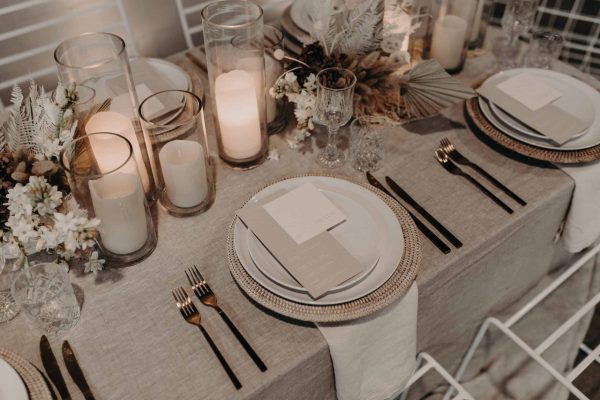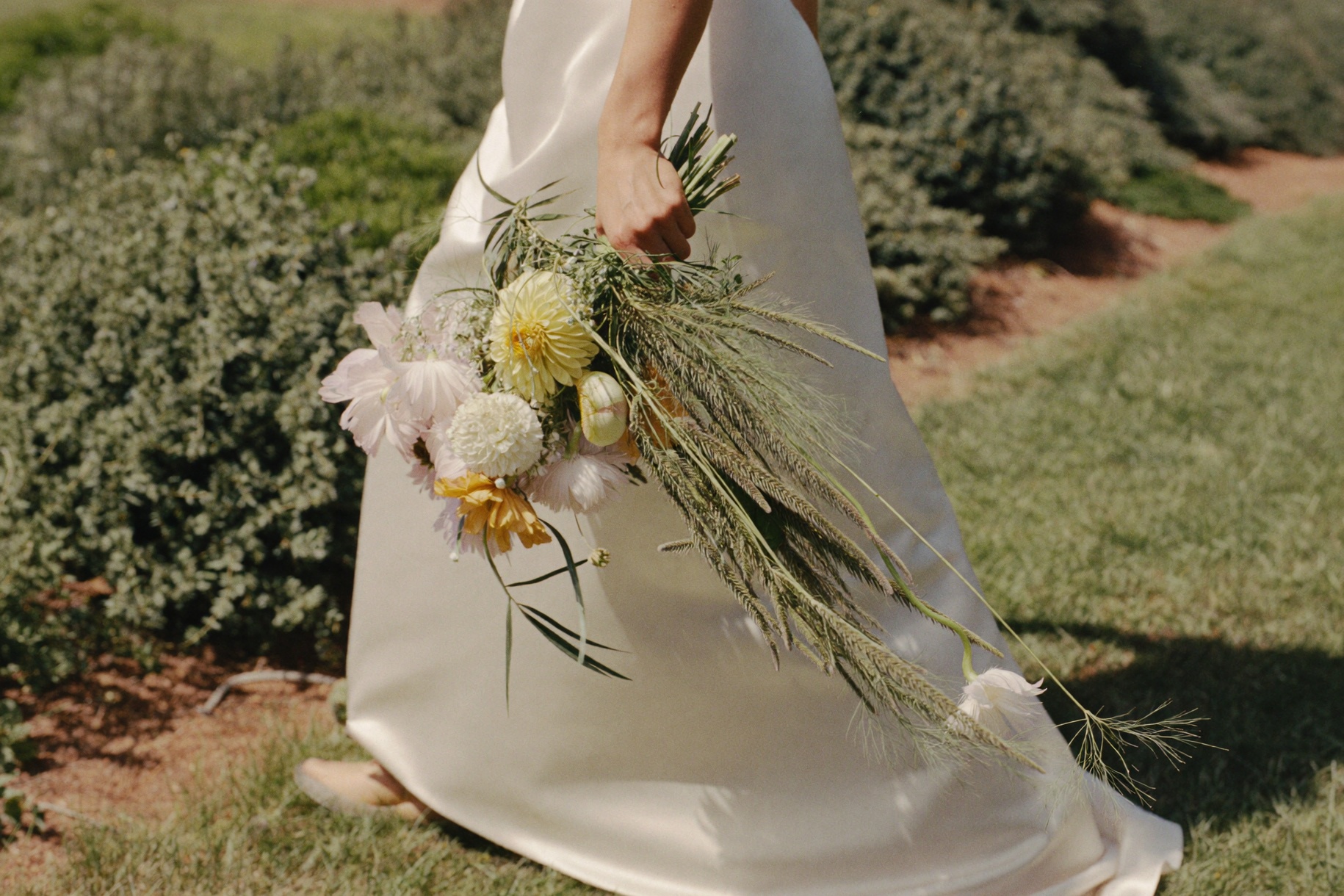
Wedding flowers have spent a long time being disciplined into shape, wired stems, tight domes of matching blooms, colour palettes chosen to the exact shade. That discipline is easing. The florals couples are asking for now look closer to something picked from a garden that morning, loose, slightly wild and full of movement.
This is not the same as looking careless. The best of this new direction is carefully considered, it simply hides the effort rather than displaying it. A trailing stem left slightly unruly, a bloom allowed to face the wrong way, foliage that has not been trimmed into a perfect line, these choices take more skill to arrange than a tight, symmetrical posy, even though the result looks unstudied.
Garden Style Over Formal Structure
The florists driving this shift are borrowing from cutting gardens rather than flower markets, working with what is genuinely in season and letting the arrangement follow the natural shape of the stem. Delphiniums lean where they want to lean. Sweet pea tendrils are left to curl. The overall silhouette is asymmetric rather than domed, with texture doing more of the work than colour matching.
For Australian couples, this direction has a practical advantage as well as an aesthetic one. Native and near native varieties, given room to move naturally rather than forced into a tight shape, suit this loose style particularly well, and they tend to be available locally and in season, which keeps both the cost and the environmental footprint more sensible.
Beyond the Bouquet
The bouquet itself is also changing shape, quite literally. Alongside the traditional handheld arrangement, florists are being asked to build floral accessories that double as something to hold and something to wear, a small woven bag threaded through with fresh blooms, a cuff of flowers worn at the wrist instead of carried, a single stem tucked through a belt loop rather than a full arrangement at all. These pieces suit a pared back gown particularly well, since they add colour and texture without competing with the dress for attention.
Scent as Part of the Styling Brief
One detail easy to overlook when planning is how a wedding smells, and this is starting to change too. Couples are talking to their florists about scent as deliberately as they talk about colour, choosing a citrus note for daytime moments and something richer and warmer, like tuberose or jasmine, for the evening. It is a small addition to the brief, but scent carries memory in a way that images cannot, and guests will register it even if they never consciously notice why the room feels a certain way.
Working With a Hybrid Approach
Budget remains a real consideration with looser, more textural florals, since a naturalistic arrangement can require more stems and more skilled labour than a tight, uniform display. Many florists are managing this by blending fresh flowers with high quality faux elements in the places where longevity matters more than scent, an arch that needs to hold its shape through a long reception, or a ceremony backdrop that goes up the day before. Used well, guests cannot tell the difference, and the budget stretches considerably further.
Bringing It Into Your Own Wedding
If this direction appeals, the easiest way to brief your florist is with reference to a feeling rather than a fixed list of blooms. Describe the setting you are marrying in and the season you are marrying in, and let a good florist choose varieties that are genuinely available and suited to your venue’s light and climate. The results tend to be both more beautiful and considerably easier on the budget than chasing a specific imported bloom seen in an overseas gallery.
The wider point behind this trend is a growing comfort with imperfection as a design choice rather than an oversight. A bouquet that looks exactly like it was picked that morning, rather than assembled to a brief, tends to feel far more alive in photographs, and considerably more like the couple who chose it.