The most talked about receptions right now are not the ones that look like a styled shoot. They are the ones that feel like a long, unhurried dinner with the people you love. Across Australia, couples are stepping away from rigid formality and styling their receptions like a generous dinner party held at home.
The table as the heart of the night
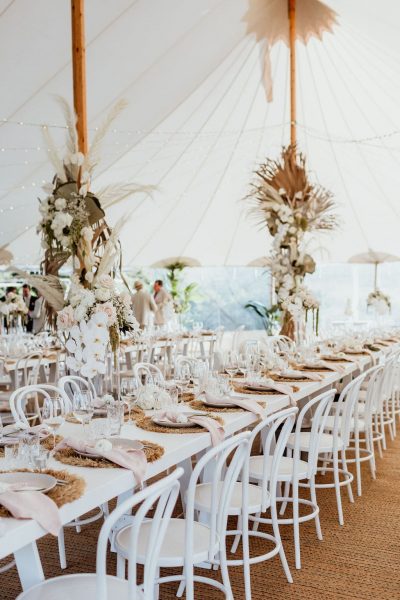
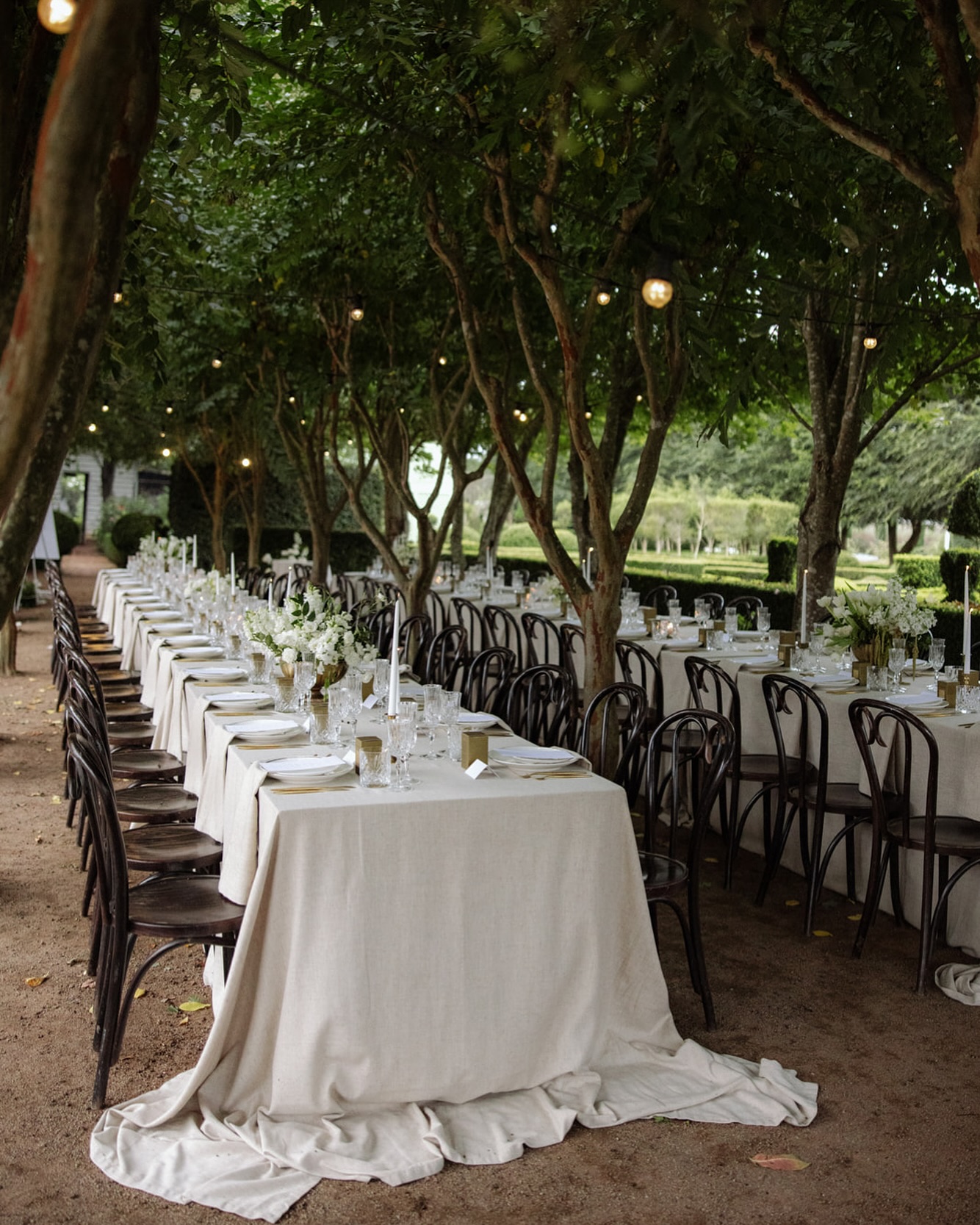
At the centre of this shift is the table itself. Long harvest tables are returning, often replacing the round layout that dominated receptions for years. Seating guests along a shared length changes the feeling of a room. Conversation flows from end to end, people linger over courses, and the meal becomes the main event rather than a pause between songs. For smaller weddings, a single long table can hold the entire guest list, which turns dinner into one continuous moment.
Layered, not laboured
The styling that suits these tables is tactile and a little undone. Natural linen runners with a soft crumple, ceramic plates in bone and sand, mixed glassware, and timber or cane chairs that need not match perfectly. The look rewards texture over polish. Stylists are moving away from surfaces packed with props and toward a few good materials allowed to speak. A beautiful linen, a considered plate and warm candlelight will almost always read better than a table crowded with detail. Small touches earn their place when they mean something, whether that is a sprig of herbs at each setting, a handwritten name card, or a piece of fruit echoing the season. The point is to choose a few things and let them feel intentional rather than filling the table for the sake of it.
Candlelight does the heavy lifting
If there is one element defining these receptions, it is candlelight. Taper candles in low holders, clusters of tea lights, and warm light pooling along the table turn an ordinary room into something intimate. As the evening dims, the glow draws everyone in and softens the whole space. Candlelight is also forgiving and atmospheric in a way overhead lighting never quite manages, which is part of why photographers love it. A little planning helps, since you will want enough candles to carry the table and holders that protect both your linen and your guests.
One floral moment, shared
The flowers follow the same restraint we are seeing everywhere. Rather than an arrangement at every setting, couples are running a single low line of blooms down the centre of the table, or placing a few sculptural stems among the candles. Kept low, these arrangements let guests see and talk to one another across the table, which is the whole point. Seasonal and local stems suit the relaxed mood, and they keep the focus on the gathering rather than the production.
Designing for the way people actually celebrate
What makes this approach work is that it is built around your guests rather than the camera. A long table encourages people to stay seated, talk and settle in. Banquette ends and a relaxed flow between courses give the night room to breathe. Couples are thinking less about filling every minute and more about creating the conditions for a good, long evening. It is styling in service of the experience, not the other way around.
Bringing it home in an Australian setting
This look feels especially natural here, where so many celebrations spill outdoors. A long table set on a terrace at golden hour, under a stretch of festoon lighting or beneath a pergola, makes the most of our light and our climate. Sandstone courtyards, garden settings and open sheds all lend themselves to the format. The aim is a room, or a garden, that feels personal and warm, the kind of place where guests forget to check the time. Done well, a long table does more than seat your guests. It gathers them.
Photo: Liz Morgan / Unsplash